eng
eng English
 русский
 Deutsch
 عربى
عربى
+86 189 6101 2359
+86 133 6521 5663
+86 138 5268 6835
A plant engineer recently asked us to quote 316L threaded rods for a water treatment skid that had been in service for under a year. The rods came from a low-cost supplier, met the nominal diameter on paper, and arrived on time. They also developed rust staining at the thread roots within months, and torque values drifted during installation. The root cause was not the thread standard. It was the supply chain: the "manufacturer" had bought rod stock from a trader with no mill certificates, no verified chemical composition, and no passivation line.
The conclusion for buyers is straightforward. When you evaluate a threaded rods manufacturer, price per meter is the last metric that should drive the decision. Material traceability, dimensional control, and process capability determine whether the rods survive the application — and whether the project avoids expensive rework.
Content
Buyers often use "threaded rod," "all-thread," and "stud bolt" interchangeably, but a professional threaded rods manufacturer treats them as different products because each form serves a different joint design:
The three forms look similar, but tolerances, thread runout, and straightness requirements differ significantly. A DIN 975 stainless steel threaded rod is specified differently from a DIN 976 stainless steel stud bolt, and a manufacturer that does not control those differences will produce parts that fail at the joint.
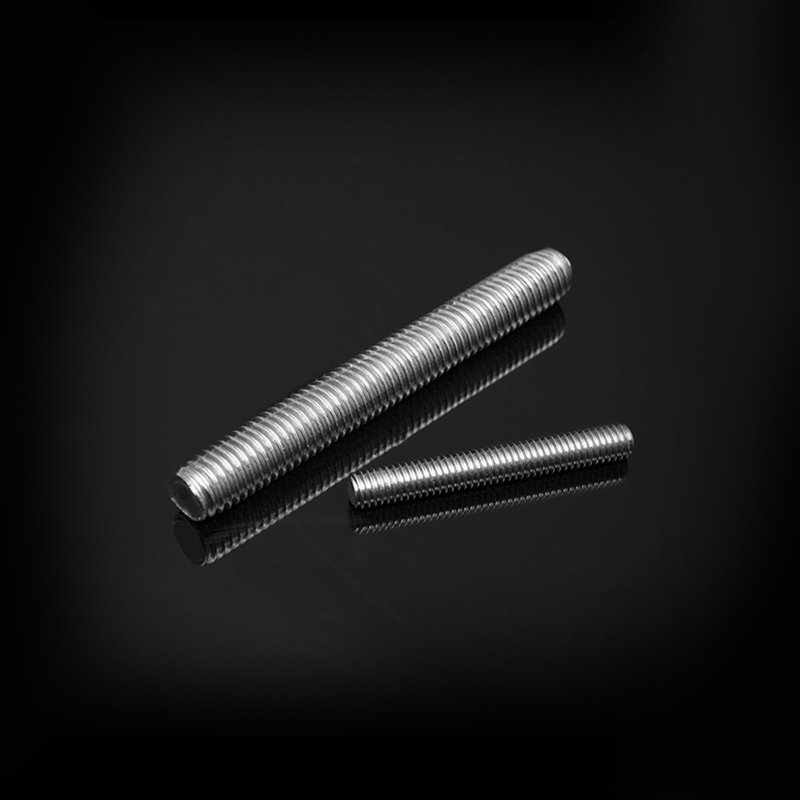 Custom DIN976 Stainless Steel Stud Bolts Manufacturers, Company - Jiangsu HuajieJiangsu Huajie Stainless Steel is China Custom DIN976 Stainless Steel Stud Bolts Manufacturers and Factory, Appearance Characteristics...View Product →
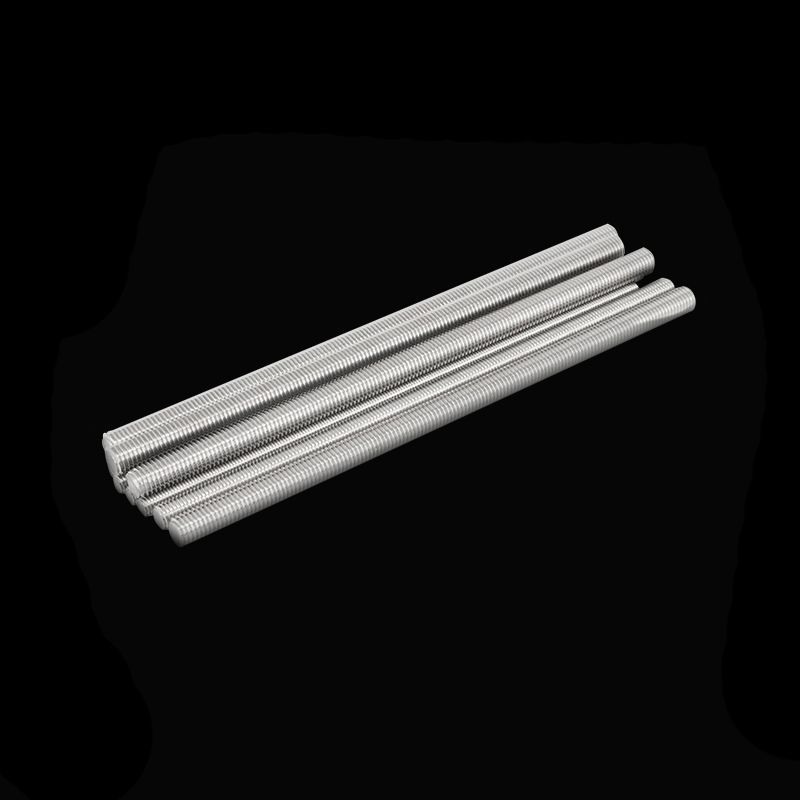 Stainless Steel Threaded Rods Manufacturers, Stainless Steel Threaded Bar CompanHuajie Stainless Steel is Stainless Steel Threaded Rods Manufacturers and Wholesale Stainless Steel Threaded Bar Company, we offer Wholes...View Product →
| Product form | Common standard | Typical applications | Distinguishing feature |
|---|---|---|---|
| Continuous thread rod | DIN 975 | Hangers, anchors, tie rods | Fully threaded along the entire length |
| Stud bolt | DIN 976 | Flanged pipe connections | Threaded ends with defined thread runout |
| Double-end stud | DIN 939 | Pump and valve assemblies | Engagement length of about 1.25d on one end |
Procurement teams often ask how to distinguish a genuine manufacturer from a trading company that resells imported bar. The answer sits in four areas: material, dimensions, mechanical properties, and surface condition.
The most common stainless grades for threaded rods are 201, 304, and 316L. Grade 304 covers most interior applications and mild atmospheric exposure. Grade 316L adds molybdenum for coastal, chemical, and food-processing environments. Grade 201 appears in low-cost, non-critical fastening.
The risk is mislabeling. A rod marked "304" may contain less nickel than specified, which reduces corrosion resistance sharply, and the difference is invisible to the naked eye. A responsible manufacturer runs chemical analysis with a spectrometer on each incoming coil and keeps mill certificates for every heat. Our comparison of 316 threaded rod vs 304 corrosion and strength shows how much the grade choice changes service life in aggressive environments.
Threaded rods are normally produced to thread class 6g for external threads, matched with nuts at class 6H. Pitch diameter, major diameter, and straightness all affect assembly. A slightly oversized rod can gall during installation; an undersized rod reduces load capacity. A serious manufacturer uses thread ring gauges, optical measurement, and straightness checks rather than a caliper on the bar end.
For stainless threaded rods, property classes such as A2-70 and A4-80 define minimum tensile and proof strengths. These values come from cold working or heat treatment, not chemistry alone. Two rods of identical grade can differ in yield strength if one manufacturer controls strain hardening and the other does not.
The surface matters as much as the chemistry. Burrs, tool marks, and embedded iron particles become initiation points for corrosion. A professional manufacturer applies a passivation process that removes free iron and restores the protective chromium oxide layer, then verifies the result with salt spray testing.
Before approving a threaded rods manufacturer, check which quality management systems the factory actually operates. ISO 9001 for quality, ISO 14001 for environment, and ISO 18001 for occupational safety indicate a controlled production environment. Product standards also matter: a supplier that manufactures to DIN, GB, JIS, ANSI, and ISO can support projects that switch between design codes.
Certificates should be backed by equipment. A factory that owns a spectrometer, tensile testing machine, and salt spray chamber can verify its own output. Jiangsu Huajie Stainless Steel Products, for example, operates an 80,000-square-meter plant with a 60,000-ton annual capacity and in-house testing, which allows it to control the process from stainless coil to finished rod rather than outsourcing critical steps.
The way threads are formed changes rod performance. Rolled threads are cold-formed, which compresses the grain structure and produces smooth, work-hardened flanks. Cut threads remove material and leave a rougher surface that is more vulnerable to fatigue cracking under dynamic loads. This is why reputable threaded rods manufacturers prefer thread rolling for high-volume production.
Full-process control also determines straightness and length accuracy. Rods cut from coil need straightening; over-aggressive straightening creates residual stress and bending in service. Modern cut-to-length equipment holds tolerances within a few millimeters, while poor cutting leaves burrs that damage nuts during installation.
When qualifying a new supplier, place these items in the technical review before comparing prices.
| Evaluation item | What to check | Why it matters |
|---|---|---|
| Raw material | Mill certificates, chemical composition reports | Prevents mislabeled "304" or low-nickel substitution |
| Thread tolerance | Thread ring gauge reports, pitch diameter data | Ensures consistent assembly torque and load rating |
| Standards compliance | DIN, GB, JIS, ANSI, or ISO test documentation | Guarantees interchangeability with project specifications |
| Surface treatment | Passivation records, salt spray results | Confirms corrosion resistance in real service |
| Traceability | Batch or heat numbers on packing and certificates | Allows recall and root-cause analysis for failed lots |
| Quality system | ISO 9001 / 14001 / 18001 certification scope | Shows how seriously the factory manages process control |
A common procurement mistake is ordering "stainless steel threaded rods" without specifying grade, property class, and standard. The result is a batch that meets the seller's interpretation instead of the application's requirement. A clear specification, together with a careful review of the manufacturer's test reports, reduces that risk more than any discount negotiation.
Threaded rods from a qualified stainless manufacturer end up in structural hangers, pipeline supports, equipment anchoring, and plant maintenance. In sectors such as high-speed rail, petrochemical, nuclear power, and new energy, a failed rod affects safety and regulatory compliance, not just maintenance budgets.
When a rod suspends a cable tray in a tunnel, an undersized thread or brittle surface can fail under vibration. When a stud seals a flange, the thread's preload behavior decides whether the joint stays tight. Understanding when to use a threaded rod instead of a bolt or screw is part of the design process; choosing a manufacturer who can supply the right form, grade, and certification is the other part.
Industrial buyers also need a partner who can produce DIN 939 double-end studs with consistent engagement length, because pump and valve assemblies depend on exact thread engagement for preload accuracy. If the stud is too short or the runout is uncontrolled, the joint loses its lock.
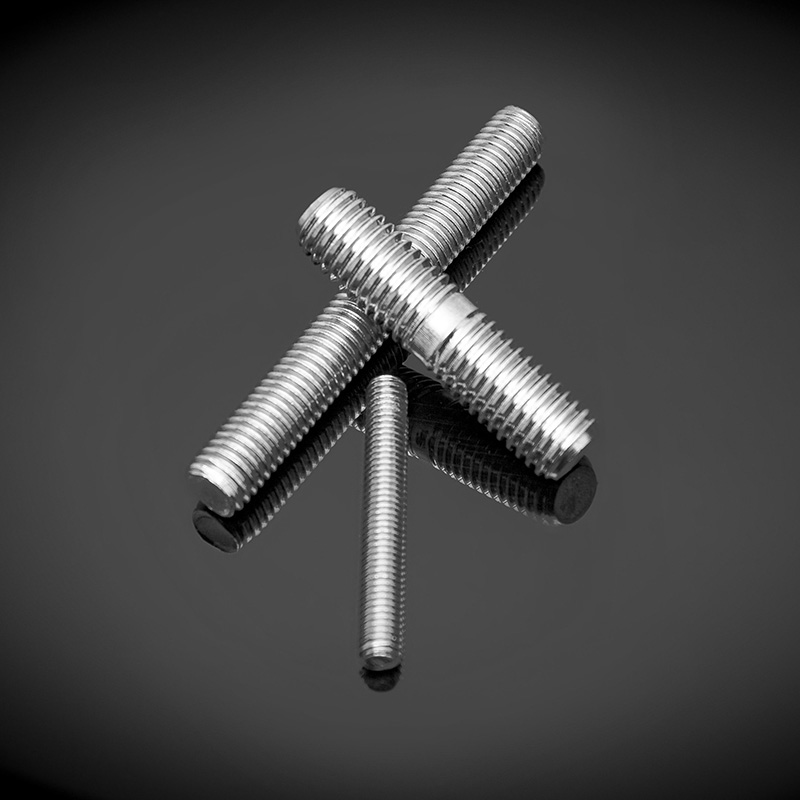 Custom DIN 835 Stainless Steel Double-End Stud Manufacturers, Company - Jiangsu Jiangsu Huajie Stainless Steel is China Custom DIN 835 Stainless Steel Double-End Stud Manufacturers and Factory, Appearance Character...View Product →
A manufacturer that answers these questions with documented evidence is worth shortlisting; a trader will usually deflect them. For a deeper walkthrough, our guide on how to select the right stainless steel threaded rod covers the material-to-application matching process in detail.
A threaded rods manufacturer earns trust through what it can prove, not what it promises. Verified material chemistry, controlled thread tolerances, documented mechanical properties, and a clean passivated surface are the real differentiators. Start with a clear specification, evaluate the factory's testing capability, and treat price per kilogram as the final variable. That approach turns an anonymous supplier list into a shortlist you can defend — and keeps the corrosion problem off your site.
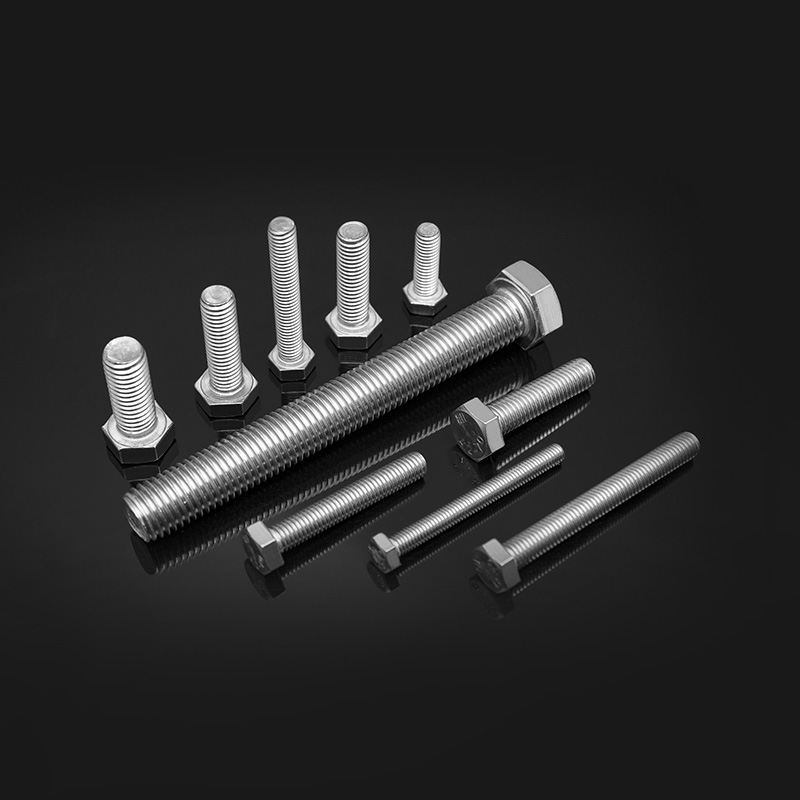
ThreadTolerance: 6gstandardDIN 13-15、DIN 13-12Rod diameter dd≤M20:A2-70、A4-70;M20<d≤M39:A2-50、A4-50;d≥M39:C3、C4;d<M39
See Details
Copyright © Jiangsu Huajie Stainless Steel Products Co., Ltd. All Rights Reserved.