eng
eng English
 русский
 Deutsch
 عربى
عربى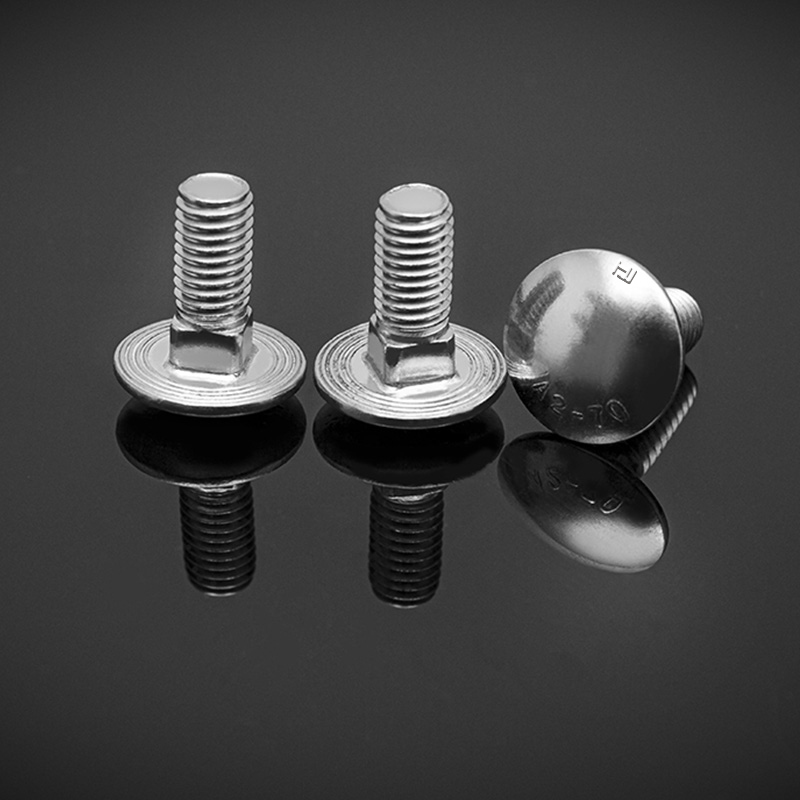
+86 189 6101 2359
+86 133 6521 5663
+86 138 5268 6835
Most stainless steel screws are not cut from bar stock. They are cold formed from wire at speeds that would surprise many engineers, then thread rolled, cleaned, and inspected. Each step leaves a fingerprint on the finished screw: grain flow, surface finish, thread accuracy, and corrosion performance. In this article, the word screw covers bolts and other headed threaded fasteners. If you understand the process, you can ask better questions about the parts you buy and recognize why two screws with identical dimensions can behave very differently in the same assembly.
Content
Every screw starts as a steel wire rod, typically 5.5 mm to 25 mm in diameter, supplied in grades chosen for strength and corrosion resistance. The most common austenitic grades for stainless steel fasteners are 304/304L and 316/316L. Grade 316L contains molybdenum, which improves resistance to chlorides and acids, making it the preferred choice for marine, chemical, and food-processing environments. Before forming, the rod is pickled to remove scale, coated with a suitable drawing lubricant, and drawn through a series of carbide dies to reach the exact diameter required for the screw size being made.
Wire drawing is not just about diameter. It also controls the volume of the blank that will fill the heading die and the wire hardness that the header can handle. A wire that is too hard may crack in the heading die; a wire that is too soft may not fill sharp head corners. That is why a manufacturer checks incoming material certificates, tensile strength, and surface defects before production.
Cold heading is the core of modern screw manufacturing. A length of drawn wire is cut to the precise blank weight, transferred through a sequence of dies, and struck by punches at high speed. The impact forces the steel to flow into the shape of the head. Hex heads, pan heads, countersunk heads, flanges, and square necks can all be formed without heating the metal. Because the material flows, the grain structure follows the contour of the head instead of being interrupted by cutting. This is the main reason a cold-headed screw is stronger and more reliable than a machined screw of the same material.
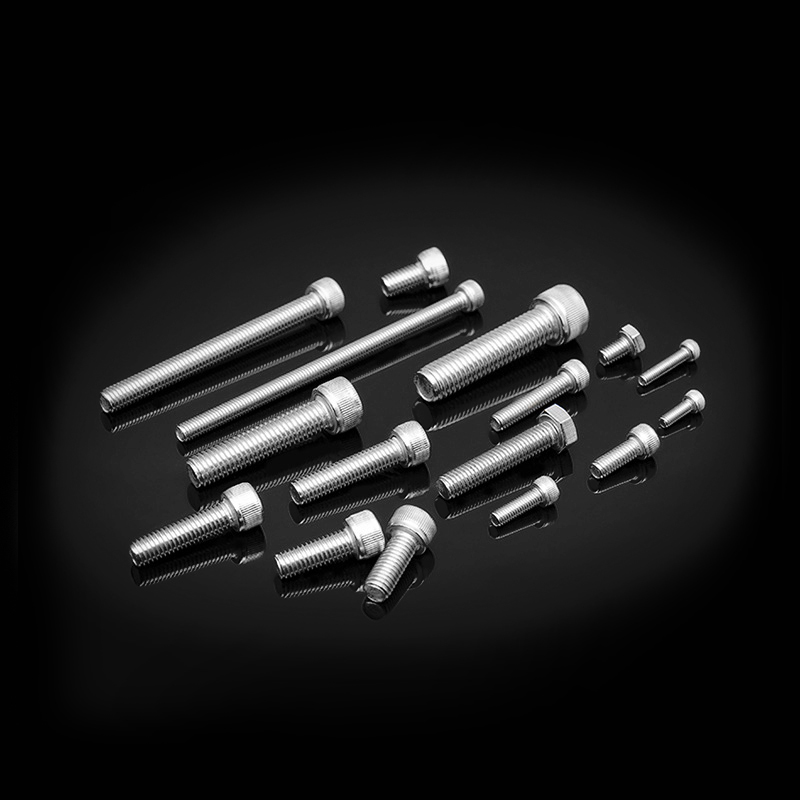
One common example of a cold-formed head is the hexagon socket head cap screw. The internal hex socket is not broached from a machined blank; it is extruded in the header, which keeps the grain structure continuous.
 DIN 912 Stainless Steel Hex Socket Head Cap ScrewsCold heading extrudes the internal hex socket, keeping grain structure continuous. Suitable for mechanical equipment connections requiring torque installation and strong fastening under high loads.View Product →
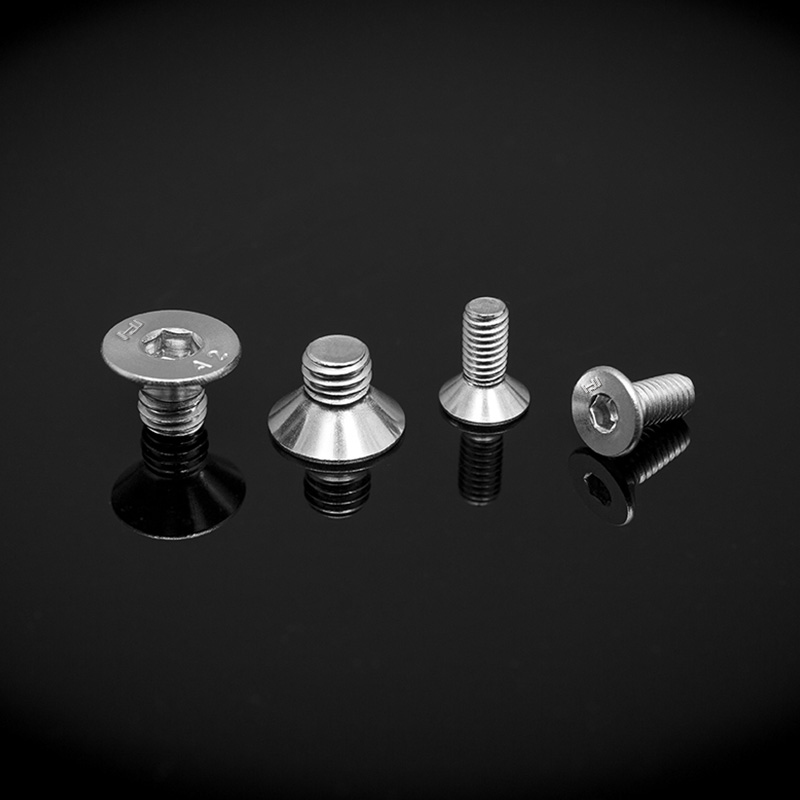
Cold heading also produces special head shapes such as mushroom heads with square necks, often used in timber and structural connections, and non-standard geometries that cannot be cut economically.
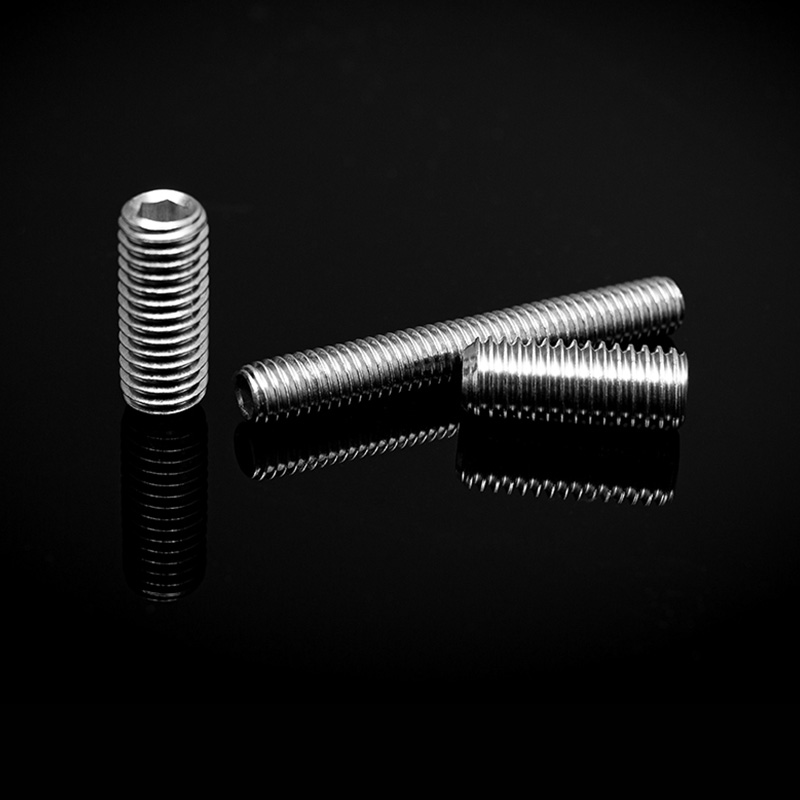
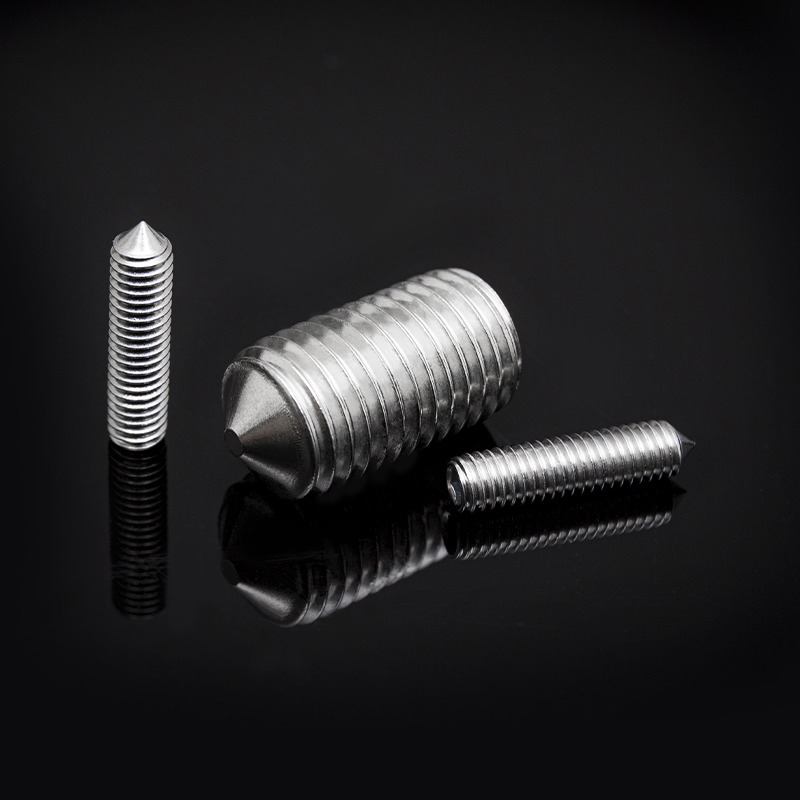
After the head is formed, the blank has no threads. The next step is thread rolling, also called thread forming. The blank is squeezed between flat dies or between rotating cylindrical dies whose ridges and grooves are the mirror image of the required thread. As the dies compress the steel, the material is pushed outward to form the roots and crests. There are no chips and no material loss.
Rolled threads have several advantages:
Thread cutting is reserved for very large diameters, samples, or materials that are not ductile enough to roll. For most stainless steel screws in sizes M2 to M20, rolling is the standard.
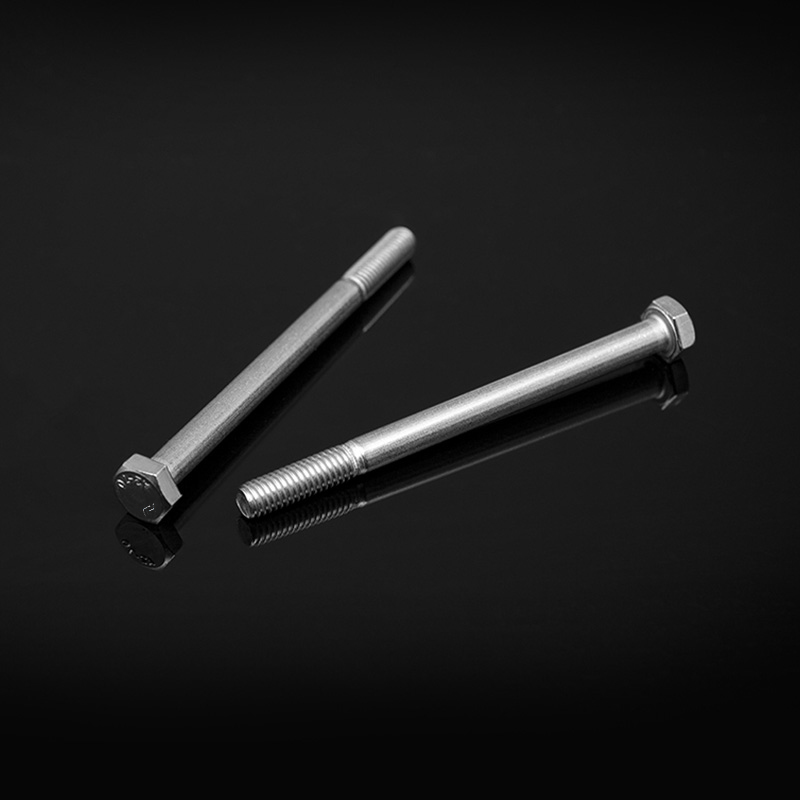
Fully threaded hexagon head screws produced to DIN 933 are a typical example: the head is cold headed and the full length of the shank is rolled in one pass.
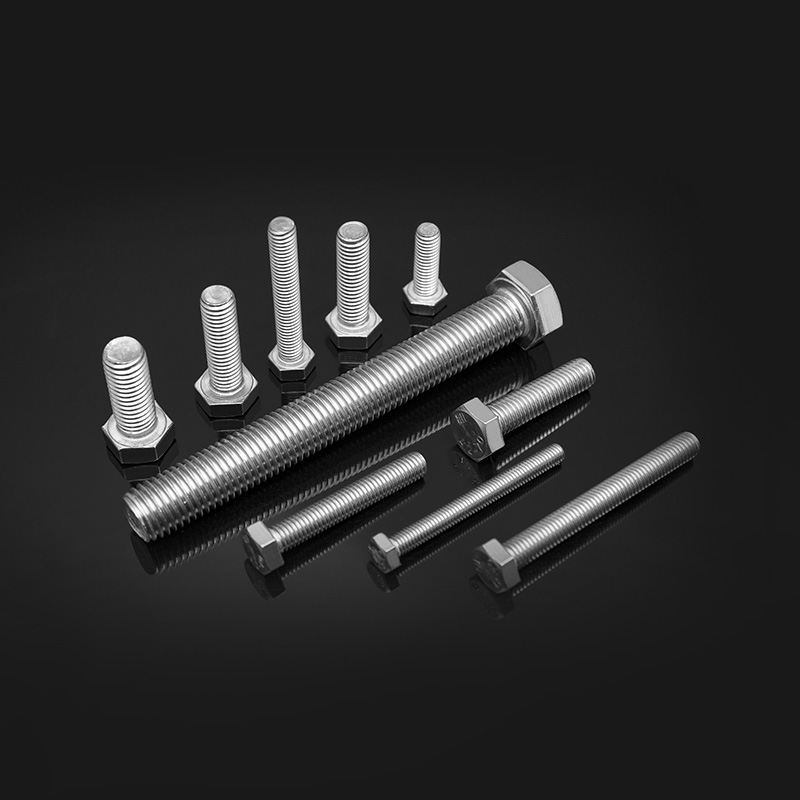 DIN 933 Stainless Steel Full Thread Hexagon Head BoltsFully threaded design provides strong connection for heavy-duty applications. Cold headed and thread rolled in one pass, suited for heavy equipment, industrial machinery, and construction.View Product →
One common misconception is that stainless steel screws are hardened by furnace heat treatment. In reality, austenitic grades such as 304 and 316L cannot be hardened by heat treatment; their strength comes from cold work induced by wire drawing and cold heading. A low-temperature treatment may be applied to relieve residual stress after severe forming, and annealing can restore ductility if the material has work-hardened too much.
Martensitic stainless steels such as 410 or 420 are different: they are hardened by quenching and tempering and are used where higher hardness and wear resistance are needed. For industrial austenitic fasteners, the phrase A2-70 or A4-80 already tells you the property class, which is achieved through cold working.
After forming and heat treatment, screws are cleaned to remove lubricants and metal fines, then passivated in a nitric or citric acid bath. Passivation dissolves free iron from the surface and promotes the natural chromium-oxide layer that gives stainless steel its corrosion resistance. For a brighter, smoother surface, electropolishing may be specified.
Quality control runs from the incoming wire to the packaged carton. In our production lines, we monitor blank size, head fill, thread pitch diameter, hardness, and visual surface condition. Final random samples are tested to the applicable standard. The table below summarizes common checks.
| Check | What it verifies | Common method |
|---|---|---|
| Dimensional accuracy | Head height, head width, thread pitch diameter | Calipers, plug gauges, optical comparator |
| Mechanical strength | Proof load, tensile strength | Tensile testing machine |
| Hardness | Resistance to indentation | Vickers or Rockwell test |
| Corrosion resistance | Resistance to red rust | Salt spray test |
| Surface quality | Burrs, cracks, die marks | Visual inspection, microscope, magnetic particle test |
Standards play a large role. ISO 3506-1 defines property classes for stainless steel fasteners: A2-70 means an austenitic 304-type fastener with a minimum tensile strength of 700 MPa, while A4-80 refers to a 316-type fastener with 800 MPa. A responsible supplier will mark the head whenever the shape allows and will provide test certificates backed by traceable records.
Knowing how screws are made changes the way you buy them. Cold-headed, thread-rolled screws usually perform better than cut or machined screws under fatigue loading, so they are preferred in engines, rail vehicles, wind turbines, and steel structures. But the process only works well when the wire is clean, the dies are maintained, and the inspection program is real.
Before placing an order, ask for material certificates, property-class markings, dimensional test reports, and salt-spray data. Visit the factory or request video evidence of production. Worn cold-heading dies can leave cracks under the head that are invisible to the naked eye, and a bad batch may pass a simple dimensional check while hiding internal defects. A trustworthy supplier will show you how they control these risks.
To define a practical specification for your application, you can read our guide to choosing stainless steel bolts.
Special head shapes are also made by the same process. For example, a mushroom head with square neck is cold headed with a square collar under the head to prevent rotation in timber or structural connections.
 DIN 603 Stainless Steel Mushroom Head Square Neck BoltsSemi-circular head with square neck prevents rotation, ideal for timber and metal joints. Short thread suits softer materials like wood, used in furniture and structural connections.View Product →
This is the kind of variation that proves a manufacturer understands tooling design, not just catalogue standards.
Screw manufacturing is a precision-forming discipline. Once you know how screws are made, you can evaluate a supplier by the quality of their wire, the condition of their dies, the stability of their thread rolling, and the completeness of their inspection data. That is far more meaningful than comparing prices alone.

ThreadTolerance: 6gstandardDIN 13-15、DIN 13-12Rod diameter dd≤M20:A2-70、A4-70;M20<d≤M39:A2-50、A4-50;d≥M39:C3、C4;d<M39
See Details
Copyright © Jiangsu Huajie Stainless Steel Products Co., Ltd. All Rights Reserved.