eng
eng English
 русский
 Deutsch
 عربى
عربى
+86 189 6101 2359
+86 133 6521 5663
+86 138 5268 6835
Content
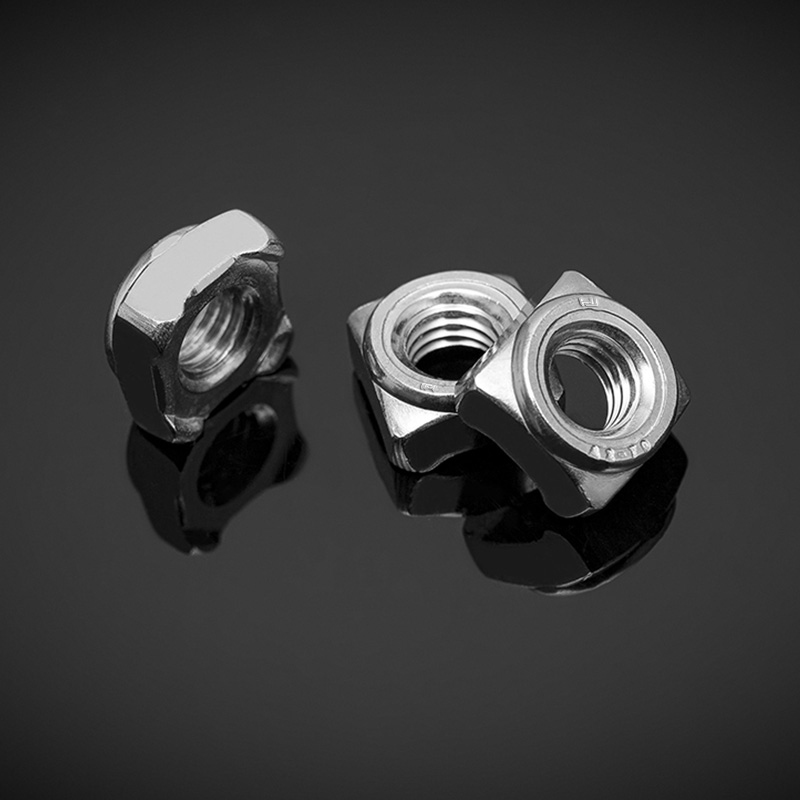
A stainless steel square nut is a four-sided internally threaded fastener designed to mate with a bolt or threaded rod to create a secure mechanical joint. Unlike the hexagonal nut that dominates most modern fastening applications, the square nut's geometry is a deliberate engineering choice rooted in functional advantages that remain relevant across a wide range of industrial, structural, and specialty applications. The four flat sides of the square nut provide a larger bearing surface against the mating material compared to a hexagonal nut of equivalent thread size, and the right-angle corners engage more positively with channels, slots, and grooves in structural profiles—preventing rotation without the need for a secondary locking mechanism in many cases.
The use of stainless steel as the base material adds a further layer of engineering intent to the design. Stainless steel grades used for square nuts—primarily AISI 304, AISI 316, and duplex grades—contain chromium at concentrations of 10.5% or higher, which causes a passive oxide layer to form spontaneously on the surface when exposed to oxygen. This passive layer is self-repairing: if scratched or damaged, it reforms in the presence of moisture and air, continuously protecting the underlying metal from corrosion. The combination of square geometry and stainless steel metallurgy creates a fastener that is not merely functional but specifically optimized for demanding environments where both mechanical performance and long-term material integrity are critical.
The square cross-section of these nuts is not an archaic holdover from pre-industrial manufacturing—it is a geometrically purposeful form that offers specific mechanical advantages in situations where hexagonal nuts are actually less effective. Understanding these geometric advantages explains why square nuts remain in active production and widespread use despite the dominant position of hex nuts in general fastening.
For a given thread size, a square nut has a larger overall face area than a hexagonal nut of equivalent width across flats. This larger bearing surface distributes the clamping force generated by bolt tightening over a greater area of the mating material, reducing the contact stress beneath the nut face. In applications involving softer materials—aluminum profiles, wood, composite panels, or plastic structural members—this reduced contact stress is the difference between a joint that clamps effectively without surface damage and one that embeds into or crushes the substrate under torque. The larger face also increases resistance to pull-through failure, where the nut face is pulled through a clearance hole under tensile load.
The defining geometric advantage of the square nut in modern applications is its ability to engage positively within T-slot aluminum extrusion profiles, structural steel channels, and unistrut-type support systems. When a square nut is inserted into a T-slot channel, its four sides register against the channel walls on all sides, preventing rotation when the mating bolt is tightened. This self-locking-in-channel behavior allows a single operator to tighten the bolt from one side without holding the nut—a significant practical advantage in assembly-line manufacturing, modular machine building, and construction where access to both sides of the joint is restricted. A round or hexagonal nut inserted into the same channel would simply spin as the bolt is turned, requiring two-person operation or a secondary tool to hold the nut stationary.
Square nuts offer four wrench engagement positions compared to three for a hexagonal nut (considering opposite-flat pairs). In confined spaces where wrench swing arc is limited—inside structural channels, behind panels, or in dense equipment assemblies—the ability to engage a wrench at 90° intervals rather than 60° intervals can be the practical difference between a joint that can be tightened with available tools and one that requires specialized access equipment. The flat sides of the square nut also engage more positively with open-ended wrenches, reducing the risk of the wrench slipping off under high torque in corroded or dirty conditions where a hexagonal nut's angled flats may cause wrench slip.
The specific stainless steel grade used in square nut manufacture has a substantial effect on corrosion resistance, mechanical strength, and suitability for different service environments. The three most commonly specified grades each have distinct performance profiles:
| Grade | Composition | Corrosion Resistance | Tensile Strength | Primary Application |
| AISI 304 | 18% Cr, 8% Ni | Good – atmospheric and mild chemical | 515 MPa min. | General industrial, food equipment, architecture |
| AISI 316 | 16% Cr, 10% Ni, 2% Mo | Excellent – chloride and marine environments | 515 MPa min. | Marine, coastal, chemical processing, pharmaceutical |
| AISI 316L | 16% Cr, 10% Ni, 2% Mo, low C | Excellent – superior weld zone resistance | 485 MPa min. | Welded assemblies, high-purity chemical service |
| Duplex 2205 | 22% Cr, 5% Ni, 3% Mo | Outstanding – stress corrosion cracking resistance | 620 MPa min. | Offshore, desalination, high-stress corrosive service |
The molybdenum content in AISI 316 is particularly significant: molybdenum enhances resistance to pitting corrosion initiated by chloride ions—the mechanism responsible for the rapid deterioration of 304-grade fasteners in marine, coastal, or salt-spray environments. For applications within 1–5 km of a coastline, in food processing equipment cleaned with chlorinated sanitizers, or in swimming pool infrastructure exposed to pool water chemistry, specifying 316-grade stainless steel square nuts is not conservative over-engineering—it is the minimum appropriate material specification.
The design characteristics of stainless steel square nuts translate into a specific set of practical benefits that are measurable in terms of reduced maintenance cost, extended service intervals, improved assembly efficiency, and enhanced joint reliability across the applications where they are deployed.
In outdoor structural applications—solar panel mounting systems, agricultural equipment, outdoor signage structures, and marine berthing infrastructure—fastener corrosion is the primary driver of maintenance interventions. A corroded fastener that cannot be removed without drilling out or cutting requires expensive remediation work, often damaging the surrounding structure in the process. Stainless steel square nuts, properly specified for the environment, essentially eliminate this failure mode. In a coastal solar farm with tens of thousands of fasteners, specifying 316-grade stainless steel square nuts from installation rather than zinc-plated carbon steel nuts prevents the fastener replacement program that would otherwise be required within 5–8 years of installation—a cost saving that far exceeds the higher initial purchase price of stainless fasteners.
The smooth, non-porous surface of stainless steel resists bacterial adhesion and biofilm formation, making stainless steel square nuts the preferred fastener for food processing equipment, pharmaceutical manufacturing machinery, and medical device fabrication. The passive oxide layer on the stainless surface does not react with food products, cleaning chemicals, or sterilization agents—including steam autoclaving, caustic cleaning solutions, and chlorinated sanitizers—ensuring that no metallic contamination enters the product stream. The square nut geometry, with its flat sides and defined corners, is also easier to visually inspect for trapped food residue than the angled facets of a hexagonal nut, supporting the strict hygiene audit requirements of food safety management systems such as HACCP and BRC Global Standards.
Modular aluminum extrusion systems—used extensively in machine guarding, conveyor frames, workstation structures, and laboratory furniture—depend on T-slot square nuts as the primary connection element at every joint in the structure. The ability of the square nut to drop into the T-slot channel and self-orient without rotation when the bolt is tightened makes it possible to construct complex multi-panel structures quickly and accurately, repositioning panels and components without disassembling the entire frame. Stainless steel square nuts in this context offer the additional benefit of galvanic compatibility with aluminum profiles: while carbon steel nuts would initiate galvanic corrosion at the nut-channel contact interface in humid or condensing environments, stainless steel's electrochemical potential is sufficiently close to aluminum's to minimize galvanic attack, preserving the structural integrity of the channel profile over the lifetime of the equipment.
Stainless steel square nuts are manufactured to established international dimensional standards that ensure interchangeability and predictable mechanical performance across suppliers and applications. Key standards include:
Engineers selecting fasteners for a new application benefit from understanding how stainless steel square nuts compare to the most common alternatives across the key performance dimensions:
Realizing the full benefits of stainless steel square nuts requires correct installation practice. Several important considerations apply specifically to stainless steel threaded fasteners that differ from carbon steel installation procedures:
When the geometric advantages of the square profile are combined with the corrosion resistance, hygienic properties, and long-term dimensional stability of stainless steel, the result is a fastener that delivers a compelling combination of engineering performance and economic value across an exceptionally wide range of demanding applications—from modular industrial machine frames to coastal marine infrastructure and regulated food production environments.
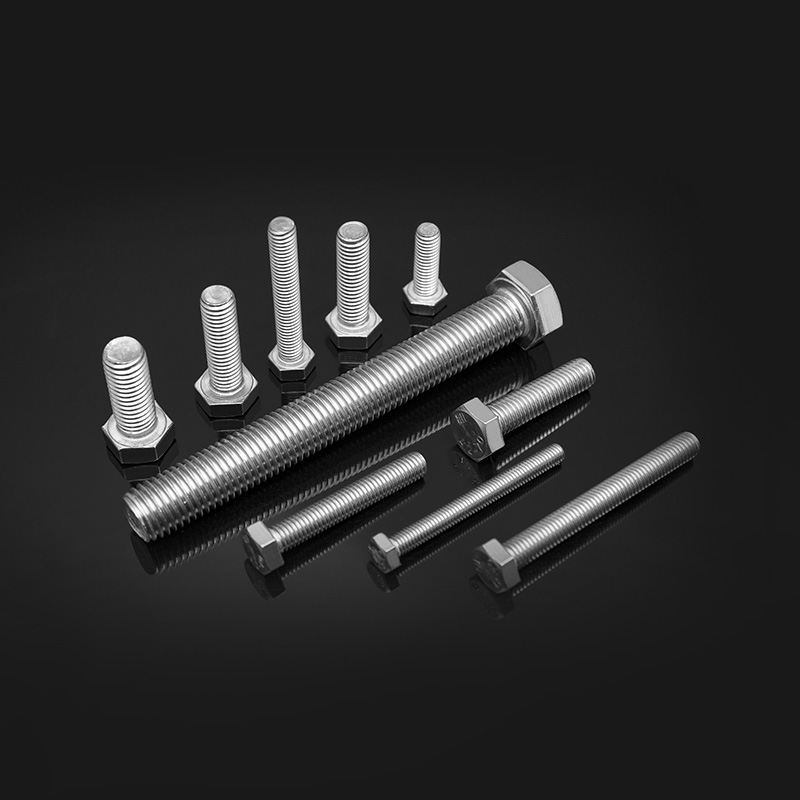
ThreadTolerance: 6gstandardDIN 13-15、DIN 13-12Rod diameter dd≤M20:A2-70、A4-70;M20<d≤M39:A2-50、A4-50;d≥M39:C3、C4;d<M39
See Details
Copyright © Jiangsu Huajie Stainless Steel Products Co., Ltd. All Rights Reserved.