eng
eng English
 русский
 Deutsch
 عربى
عربى
+86 189 6101 2359
+86 133 6521 5663
+86 138 5268 6835
Content
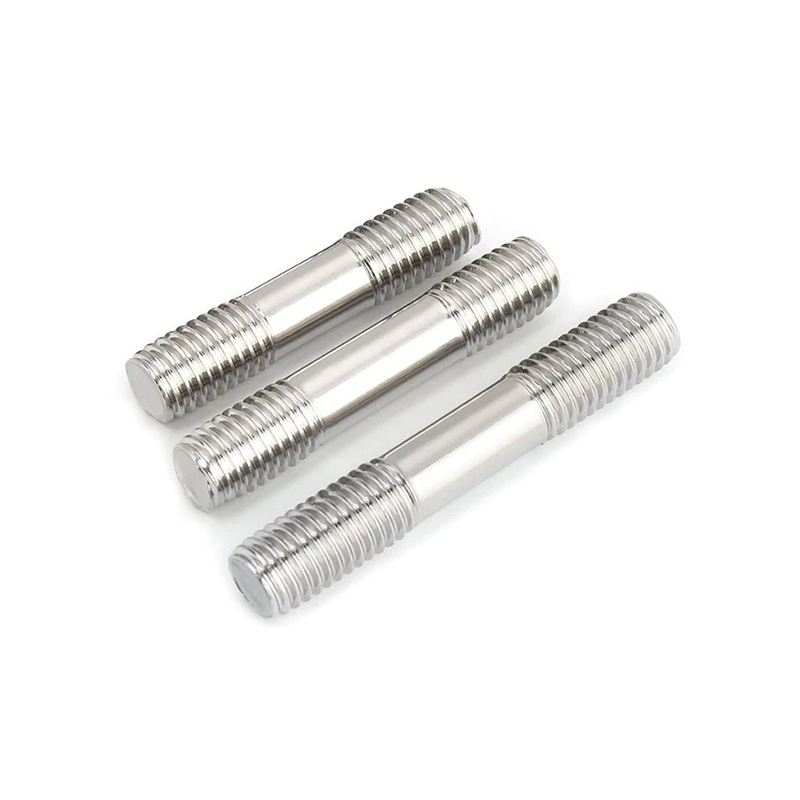
Stainless steel double headed bolts—also commonly referred to as stud bolts or double-end studs—are threaded fasteners that carry threads on both ends of the shank, with a plain or partially threaded central section between them. Unlike a conventional bolt that has a head on one end and threads on the other, a double headed bolt has no integral head; instead, nuts are applied to both threaded ends to clamp the joint together, or one end is permanently screwed into a tapped hole in a component while the other end accepts a nut. The absence of a conventional bolt head is a deliberate design feature that enables specific structural and assembly configurations that a standard bolt cannot achieve.
The use of stainless steel as the base material—most commonly AISI 304, AISI 316, or duplex grades—gives these fasteners the corrosion resistance, temperature stability, and hygienic surface properties required in environments where carbon steel fasteners would deteriorate rapidly. Stainless steel double headed bolts are manufactured to precise dimensional standards with controlled thread tolerances on both ends, ensuring that nut engagement on each end of the stud delivers the designed clamping force without thread stripping or galling under service loads.
Stainless steel double headed bolts are produced in several distinct configurations, each optimized for a specific type of joint or installation requirement. Understanding the differences between these configurations is essential for specifying the correct product for a given application.
In this configuration, both threaded ends have identical thread length, pitch, and diameter. Equal-length stud bolts are used in through-joint applications where the stud passes completely through both components being joined, with nuts applied and tightened on each end simultaneously. This configuration is common in high-pressure flange assemblies—such as pressure vessel connections, pipeline flanges, and heat exchanger covers—where the joint must be loaded symmetrically from both sides to achieve the uniform gasket compression required for a leak-free seal. The equal thread lengths ensure that both nuts can be run to the same engagement depth, producing balanced clamping force distribution across the flange face.
Unequal-length stud bolts have different thread lengths on each end—one short end for permanent installation into a tapped hole (the "plant" end) and one longer end to receive the removable nut (the "nut" end). The plant end thread length is typically equal to 1.0–1.5 times the bolt diameter for steel components and 1.5–2.0 times the diameter for softer materials such as aluminum or cast iron, ensuring adequate thread engagement strength in the tapped hole. The longer nut end provides sufficient thread engagement for the nut plus additional thread protrusion beyond the nut face for inspection and locking device installation. This configuration is standard for cylinder head studs in engines, flange studs in pressure equipment, and any assembly where one component must be removable for maintenance while the stud remains permanently fixed in the base component.
All-thread stud bolts carry threads along their entire length from end to end, with no plain shank section between the threaded zones. This configuration provides maximum flexibility in nut positioning—the nut can be placed anywhere along the stud length to accommodate variable joint thicknesses, spacers, or multiple components stacked in a single assembly. All-thread studs are widely used in construction anchor bolt applications, suspended ceiling systems, equipment mounting frameworks, and wherever the joint geometry is not fixed at design time and must accommodate field variations in component dimensions.
The corrosion resistance, mechanical strength, and temperature capability of a stainless steel double headed bolt are determined primarily by the alloy grade selected. Matching the grade to the service environment is one of the most critical decisions in stud bolt specification, as an under-specified grade will corrode or fail prematurely, while an over-specified grade adds unnecessary cost without additional functional benefit.
| Grade | Key Alloying Elements | Corrosion Resistance | Min. Tensile Strength | Typical Application |
| AISI 304 (A2) | 18% Cr, 8% Ni | Good – atmospheric and mild chemical | 500 MPa | General industrial, food equipment, HVAC |
| AISI 316 (A4) | 16% Cr, 10% Ni, 2% Mo | Excellent – chloride and marine | 500 MPa | Marine, coastal, chemical processing |
| AISI 316L | 16% Cr, 10% Ni, 2% Mo, low C | Excellent – superior weld zone resistance | 485 MPa | Welded assemblies, high-purity service |
| Duplex 2205 | 22% Cr, 5% Ni, 3% Mo | Outstanding – stress corrosion cracking | 620 MPa | Offshore, desalination, high-stress corrosive |
| Super Duplex 2507 | 25% Cr, 7% Ni, 4% Mo | Superior – aggressive chloride service | 750 MPa | Subsea, seawater systems, acid gas service |
The molybdenum content in 316-grade studs significantly enhances resistance to chloride-induced pitting—the mechanism that causes rapid and unpredictable failure of 304-grade fasteners in coastal, marine, and chlorinated process environments. For applications within several kilometers of a coastline or in contact with seawater, process brine, or chlorinated cleaning chemicals, specifying 316 or higher grade is the minimum appropriate material selection, not an engineering overcaution.
Stainless steel double headed bolts serve critical fastening roles across a diverse range of industries, in each case leveraging their specific combination of through-joint clamping capability, corrosion resistance, and design flexibility to solve fastening challenges that conventional bolts cannot address as effectively.
High-pressure flanged joint assemblies in chemical plants, refineries, and power generation facilities represent one of the largest application areas for stainless steel stud bolts. Pressure vessel covers, heat exchanger heads, and pipeline flanges are connected by arrays of stud bolts—typically in equal-length configuration—that pass through the flange bolt holes with nuts tightened on both faces. This configuration allows the full bolt load to be developed by tightening from both ends simultaneously, producing the high and uniform gasket seating stress required to seal process fluids at elevated pressures and temperatures. The relevant design standard for these applications—ASME B16.5 for pipe flanges and ASME VIII for pressure vessels—specifies stud bolt dimensions, thread class, and material requirements in detail, with stainless steel grades selected based on process fluid corrosivity and temperature.
Internal combustion engines, compressors, and industrial machinery use unequal-length stud bolts extensively to connect covers, heads, manifolds, and bearing housings to main castings. The plant end of the stud is screwed permanently into the casting during assembly, and the removable cover or head is subsequently mounted over the protruding studs and secured with nuts. This arrangement allows the cover or head to be removed for maintenance—replacing gaskets, inspecting internal components, or servicing bearings—without disturbing the studs in the casting, which remain precisely located and correctly torqued in the tapped holes. In marine engine applications or food processing machinery where stainless steel is required to prevent corrosion of fasteners in humid or wash-down environments, stainless double headed bolts are specified for all external stud positions.
In structural and civil engineering applications, stainless steel all-thread stud bolts serve as anchor bolts embedded in concrete foundations, as threaded rods in suspended ceiling systems, as tension rods in curtain wall façade systems, and as connecting elements in modular structural steel assemblies. The all-thread configuration allows the nut position to be set precisely during installation to accommodate the actual as-built dimensions of the structure, compensating for dimensional variations inherent in cast concrete or field-assembled steelwork. Stainless steel grade 316 or duplex is specified for coastal and marine construction projects—seawall infrastructure, jetty decking, offshore platform handrails, and similar applications—where carbon steel anchor bolts would begin corroding within months of exposure to salt spray.
Equipment used in food production, beverage processing, and pharmaceutical manufacturing must comply with strict hygiene standards that require all contact and near-contact surfaces to be non-corroding, non-contaminating, and cleanable without surface degradation. Stainless steel double headed bolts used in these environments are typically produced with a smooth, passivated surface finish that resists bacterial adhesion and withstands repeated cleaning with caustic and acidic sanitizers without surface deterioration. The stud bolt configuration—where no bolt head protrudes from the joint face—also simplifies cleaning by reducing the number of recesses and crevices around the fastener that could trap product residue or harbor bacterial growth.
Stainless steel double headed bolts are manufactured to established international standards that define thread form, dimensional tolerances, mechanical properties, and material requirements. Referencing the correct standard in procurement specifications ensures that received fasteners are interchangeable, correctly dimensioned, and have verified mechanical properties:
The performance of stainless steel double headed bolts in service depends not only on correct material and dimensional specification but also on proper installation technique. Several installation-specific factors apply particularly to stainless steel threaded fasteners and must be understood to avoid premature joint failure or fastener damage during assembly.
Galling is the most common and damaging installation failure mode for stainless steel threaded fasteners. It occurs when the microscopic surface asperities on mating stainless steel thread surfaces weld together under the combination of contact pressure and frictional heat generated during tightening, causing the thread surfaces to tear and seize. Once galling occurs, the fastener is typically destroyed and must be drilled out—a costly and time-consuming remediation. Galling is prevented by applying a nickel-based or copper-based anti-seize compound to the threads before assembly, tightening at a slow and steady rate to prevent frictional heat accumulation, and ensuring that the nut and stud threads are clean and free from debris before engagement. Using stainless steel nuts of a different grade than the stud—for example, 316 nuts on 304 studs—also reduces galling tendency by preventing the identical microstructure-to-microstructure contact that promotes adhesive welding.
Bolt preload—the tensile force developed in the stud when the nut is tightened—is the fundamental parameter that determines joint clamping force and seal performance in gasketed assemblies. For pressure flange applications, preload must be controlled within a specified range to achieve adequate gasket seating stress without yielding the stud. Stainless steel has a higher and more variable coefficient of friction than zinc-plated carbon steel, meaning that the torque-to-preload relationship for stainless studs cannot be assumed from standard carbon steel torque tables. Friction coefficients for stainless steel threads with anti-seize compound typically range from 0.12 to 0.18, compared to 0.10 to 0.15 for lubricated carbon steel, and this difference must be incorporated into torque specification calculations to avoid systematic under-preloading of stainless stud assemblies.
Stainless steel double headed bolts in properly specified service environments require minimal maintenance compared to carbon steel fasteners, but periodic inspection remains important—particularly in high-cycle, high-pressure, or safety-critical applications:
When correctly specified, properly installed, and maintained according to these guidelines, stainless steel double headed bolts deliver decades of reliable service in the most demanding industrial environments—providing the structural integrity, corrosion resistance, and reassembly convenience that make them the fastener of choice wherever conventional bolts fall short of the application's requirements.
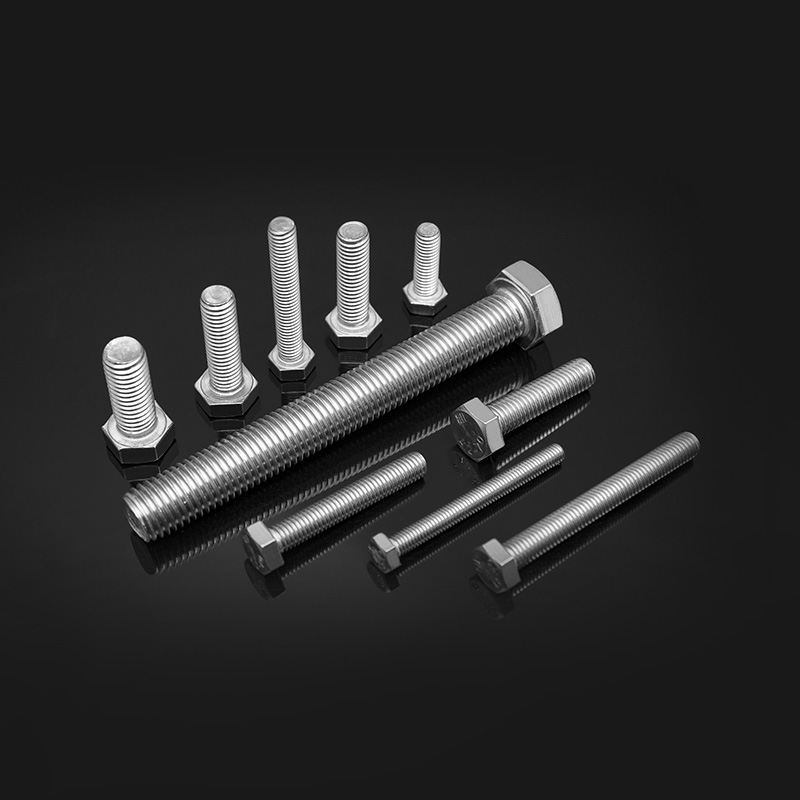
ThreadTolerance: 6gstandardDIN 13-15、DIN 13-12Rod diameter dd≤M20:A2-70、A4-70;M20<d≤M39:A2-50、A4-50;d≥M39:C3、C4;d<M39
See Details
Copyright © Jiangsu Huajie Stainless Steel Products Co., Ltd. All Rights Reserved.