eng
eng English
 русский
 Deutsch
 عربى
عربى
+86 189 6101 2359
+86 133 6521 5663
+86 138 5268 6835
Content
At first glance, the slotted screw seems like a relic. Phillips, Pozidriv, Torx, hex socket, and Robertson drive systems have all been developed specifically to address the most commonly cited limitation of the single slot — cam-out, the tendency of a flathead screwdriver to slip out of the drive recess under torque. Yet stainless steel slotted screws continue to be specified, purchased, and used in significant quantities across food processing, pharmaceutical manufacturing, marine engineering, chemical processing, electronics, and precision instrument assembly. This is not institutional inertia or failure to adopt better technology. It is a deliberate, application-informed choice driven by a set of practical advantages that more modern drive systems do not fully replicate, particularly when combined with stainless steel as the base material.
Understanding why manufacturing still uses stainless steel slotted screws requires moving past the surface-level comparison of drive efficiency and looking at the complete picture: the environments where these fasteners are used, the tools available to install and remove them, the consequences of fastener corrosion or contamination, and the total cost of ownership across a product's service life. When all of these factors are weighed together, the stainless steel slotted screw frequently emerges as the most practical, most reliable, and most economical choice for a wider range of applications than its traditional image suggests.
The fundamental reason stainless steel fasteners of any drive type are specified in demanding industrial environments is their corrosion resistance — a property that no surface coating applied to a carbon steel fastener can fully replicate over an extended service life. Stainless steel's corrosion resistance derives from its passive chromium oxide layer, which forms spontaneously on the surface in the presence of oxygen and continuously self-repairs when scratched or abraded. This passive layer remains intact and functional in environments that would rapidly destroy zinc-plated, cadmium-plated, or even hot-dip galvanized carbon steel fasteners.
In food processing facilities, where fasteners are exposed to acidic cleaning chemicals, steam, and brine solutions on a daily basis, stainless steel — typically grade 304 or 316 — is the only fastener material that complies with hygiene standards without requiring frequent replacement due to corrosion. In marine applications, where salt spray and saltwater immersion attack conventional fasteners aggressively, 316 stainless steel's molybdenum content provides the additional chloride resistance needed for long-term reliability. In pharmaceutical and biotechnology manufacturing, where contamination from corroding fasteners could compromise product sterility or purity, stainless steel fasteners with their inert, non-contaminating surface are a regulatory and quality requirement rather than merely a preference.
Not all stainless steel performs equally in corrosive service, and the grade specified for slotted screws must match the actual chemical environment of the application. The three most commonly used grades in manufacturing fastener applications each have distinct performance profiles:
The single slot drive, far from being merely an outdated design, offers a set of practical advantages that become decisive in specific manufacturing and maintenance contexts. The most significant of these is tool universality — a slotted screw can be driven and removed with any flat implement that fits the slot, including improvised tools. In field service, remote maintenance, and legacy equipment repair scenarios, this universality is genuinely valuable. A technician who discovers a failed slotted screw on a piece of equipment in a remote location can use a coin, a knife blade, a strip of metal, or any rigid flat object to effect a repair. The same scenario with a Torx or hex socket screw requires the exact correct driver size — a limitation that causes real operational problems in practice.
In precision instrument manufacturing and scientific equipment assembly, the slotted drive offers another specific advantage: controlled, low-torque fastening. Because cam-out occurs before excessive torque is applied, slotted screws provide a natural torque-limiting characteristic that prevents overtightening of delicate assemblies — printed circuit board mounting, optical instrument adjustment screws, and precision gauge components where overtightening would distort critical geometry. Experienced assemblers in these industries use this characteristic intentionally, relying on the felt resistance as the driver begins to cam out as a tactile indicator that sufficient engagement torque has been reached.
The slotted drive also provides uniquely clear visual indication of fastener condition and engagement status. A properly seated slotted screw presents a clean, oriented slot that is immediately visible from a distance. A damaged, cross-threaded, or previously disturbed slotted screw shows slot deformation or misalignment that is equally visible without close inspection. In quality control environments, production line inspectors can verify fastener seating and orientation by sight during assembly verification. This characteristic is exploited in tamper-evident applications where the slot is oriented to a specific direction during final assembly — any subsequent unauthorized removal and re-installation of the fastener is immediately apparent from the change in slot orientation.
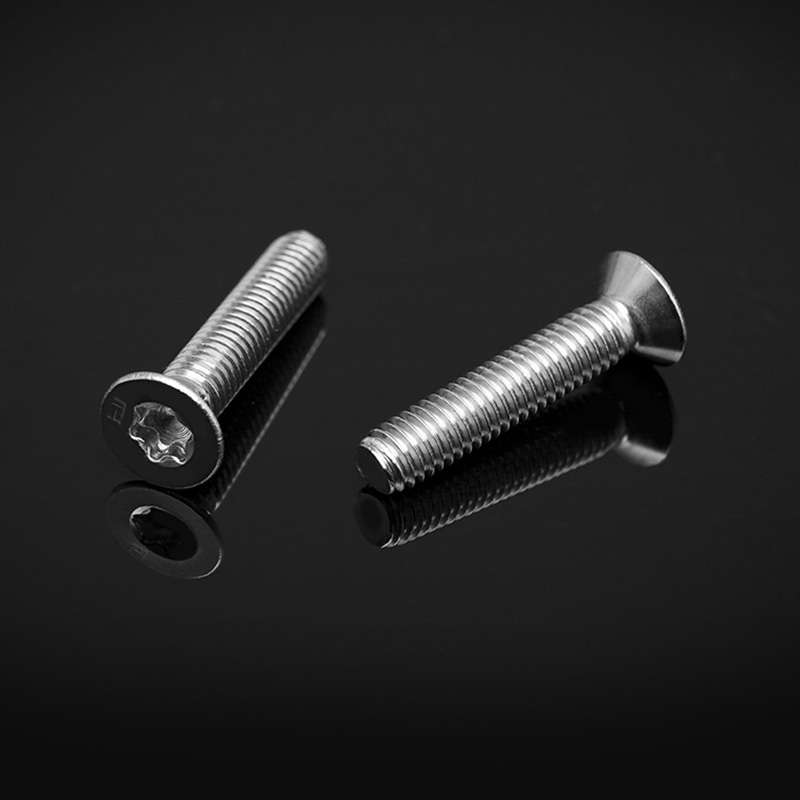
In food processing, pharmaceutical manufacturing, and beverage production — industries with stringent hygiene standards enforced by regulatory bodies — fastener head geometry is subject to design rules that specifically influence drive type selection. Hygienic design standards, including those published by the European Hygienic Engineering and Design Group (EHEDG) and the 3-A Sanitary Standards, require that fastener heads present no crevices, undercuts, or recesses where food residue, cleaning solution, or microbial contamination can accumulate and resist cleaning-in-place procedures.
The cross-recesses of Phillips and Pozidriv drives, the hexagonal socket of Allen-head screws, and the star recess of Torx drives all create enclosed or semi-enclosed cavities in the fastener head that can harbor contamination and are extremely difficult to clean reliably by spray washing or CIP systems. The slotted drive, by contrast, presents a single open groove that is fully accessible to cleaning agents and mechanical cleaning action from any direction. Combined with a flat or shallow-dome head profile, a stainless steel slotted screw presents the smallest possible surface area of fastener-head crevice in a hygienic application — which is precisely why food and pharmaceutical equipment designers specify it even when they would prefer a more torque-efficient drive system for assembly purposes.
| Drive Type | Cleanability | Crevice Risk | Hygienic Suitability |
| Slotted | Excellent | Minimal (open slot) | High |
| Phillips / Pozidriv | Poor | High (cross recess) | Low |
| Hex Socket (Allen) | Poor | Very High (enclosed hex) | Very Low |
| Torx | Poor | High (star recess) | Low |
| Slotted (flush/flat head) | Excellent | Minimal | Highest |
A substantial portion of manufacturing industry infrastructure consists of equipment that was designed and built decades ago, when slotted screws were the universal standard fastener specification. Pumps, motors, control panels, instrumentation enclosures, machine guards, and process vessels designed in the 1970s, 1980s, and 1990s were assembled with slotted screws throughout. Maintaining, repairing, and modifying this equipment requires replacement fasteners that match the original specification — and in many cases, the original specification was stainless steel slotted screws in specific sizes and head profiles.
Switching to a different drive type during maintenance — replacing slotted screws with Phillips or Torx equivalents — seems like a harmless upgrade but creates practical problems. Mixed drive types across a piece of equipment mean maintenance technicians must carry a larger range of drivers, increasing tool kit complexity and the risk of using the wrong driver size. Standardization on a single drive type throughout a facility's equipment inventory simplifies tool procurement, reduces training requirements, and eliminates the confusion of mixed fastener specifications in equipment that may be serviced by different technicians over many years. For facilities heavily invested in legacy equipment, maintaining stainless steel slotted screw specifications is the rational standardization decision.
In electrical panel assembly, terminal block installation, and electronic enclosure manufacturing, stainless steel slotted screws retain strong technical advantages over alternative drive systems. Terminal screws — the small screws that clamp electrical conductors in terminal blocks, circuit breakers, and distribution boards — are almost universally slotted for several specific reasons rooted in the requirements of the electrical industry.
From a procurement and inventory management perspective, stainless steel slotted screws offer advantages that contribute meaningfully to total cost of ownership in manufacturing operations. The slotted drive has been a standard for over a century, meaning the production tooling, quality standards, and supply chain for these fasteners are exceptionally mature. They are available from a very wide range of suppliers globally, in every conceivable size, head style, thread form, and stainless steel grade, with short lead times and competitive pricing driven by large production volumes and supply chain competition.
By contrast, specialty drive fasteners in stainless steel — particularly in less common sizes or head profiles — may have limited supplier options, longer lead times, and higher unit prices due to lower production volumes. For manufacturing operations that use stainless steel slotted screws in high volumes across multiple product lines or equipment types, the procurement simplicity, supply chain reliability, and competitive unit pricing of the slotted standard represent genuine economic advantages that influence fastener specification decisions at the engineering and procurement level.
The conclusion from examining all of these factors together is clear: stainless steel slotted screws remain in active use across modern manufacturing not because engineers are unaware of alternatives, but because they genuinely offer the best combination of corrosion resistance, hygienic design compliance, tool universality, legacy compatibility, and procurement practicality for a wide range of specific applications. The slotted drive's apparent simplicity is, in many contexts, precisely its most important engineering virtue.
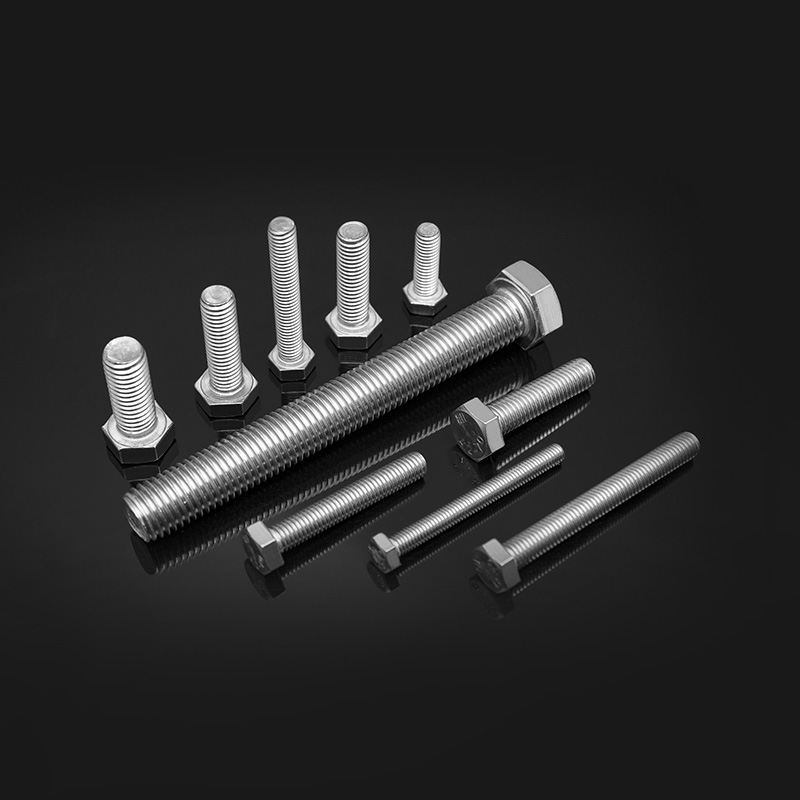
ThreadTolerance: 6gstandardDIN 13-15、DIN 13-12Rod diameter dd≤M20:A2-70、A4-70;M20<d≤M39:A2-50、A4-50;d≥M39:C3、C4;d<M39
See Details
Copyright © Jiangsu Huajie Stainless Steel Products Co., Ltd. All Rights Reserved.