eng
eng English
 русский
 Deutsch
 عربى
عربى
+86 189 6101 2359
+86 133 6521 5663
+86 138 5268 6835
Content
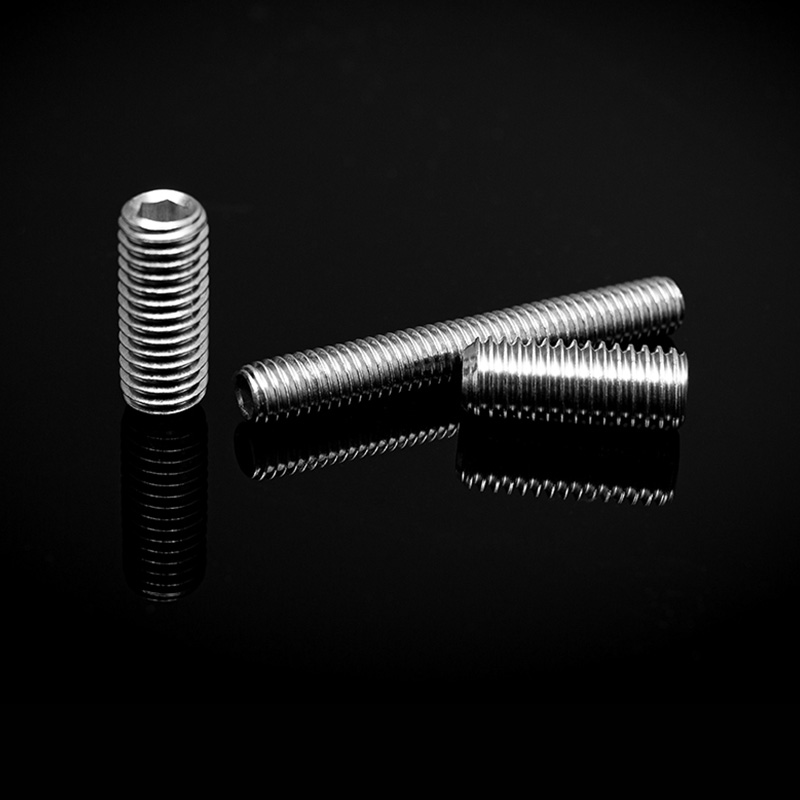
Stainless steel set screws are a category of threaded fasteners that are fully threaded from end to end and designed to be tightened entirely within a tapped hole — meaning they sit flush with or below the surface of the component they secure. Unlike standard bolts or cap screws, set screws have no protruding head. Instead, they are driven using an internal drive — most commonly a hex socket (Allen key), square socket, or slotted recess — making them ideal for applications where a smooth external profile is required. Their primary function is to secure one object within or against another, such as fixing a gear, pulley, collar, or knob onto a rotating shaft.
The use of stainless steel as the base material elevates these fasteners significantly above their carbon steel counterparts. Stainless steel grades such as 18-8 (A2, equivalent to 304) and A4 (316) offer excellent resistance to oxidation, moisture, and chemical attack. This makes stainless steel set screws suitable not only for indoor mechanical assemblies but also for demanding environments including marine installations, food processing equipment, pharmaceutical machinery, and outdoor structural applications where long-term exposure to the elements is inevitable.
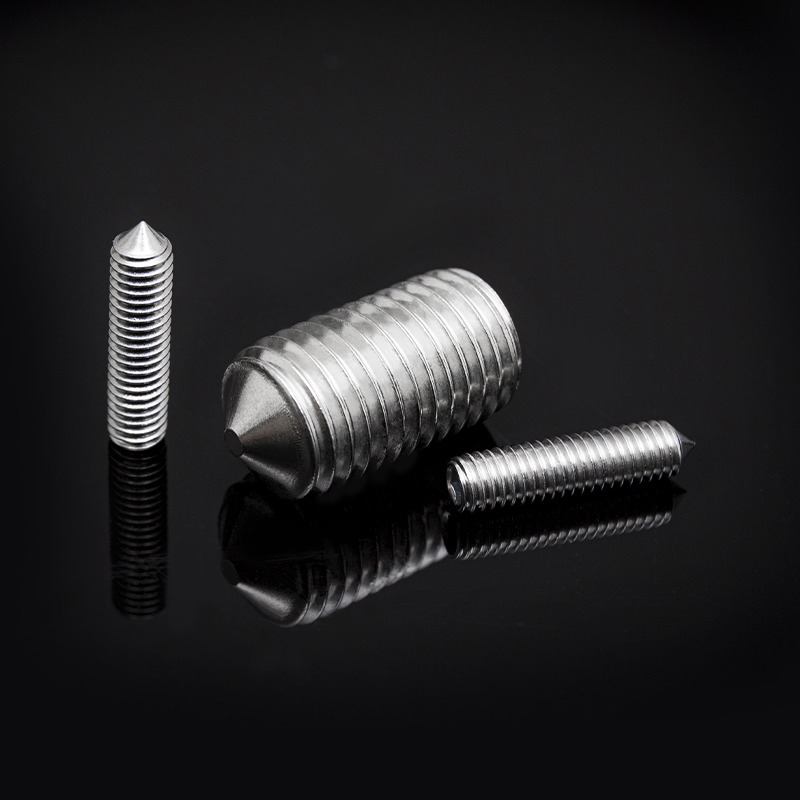
Set screws are manufactured in several tip configurations, each engineered to achieve a specific type of contact, holding force, or surface protection. Selecting the correct tip style is as important as selecting the correct thread size and material grade, since the tip geometry directly determines how the screw transfers clamping force to the mating surface.
| Tip Type | Contact Characteristic | Typical Application |
| Cup Point | Bites into shaft surface, high holding power | Shaft-to-hub locking, permanent assemblies |
| Flat Point | Broad contact, minimal surface damage | Soft shafts, frequent adjustment applications |
| Cone Point | Deep penetration, very high axial force | Permanent locking on hardened shafts |
| Oval Point | Rounded tip, low surface marring | Adjustable assemblies, pivot points |
| Dog Point | Cylindrical nose locates in a drilled hole | Precise shaft positioning, keyway locking |
| Knurled Cup Point | Serrated rim for extra grip | High-vibration environments |
The cup point is by far the most widely used tip in general industrial applications due to its excellent holding force and availability across virtually all thread sizes. However, in applications where the shaft surface must remain undamaged for reassembly — such as in instrumentation or laboratory equipment — a flat or oval point is the more appropriate choice.
The decision to specify stainless steel set screws over zinc-plated carbon steel or brass alternatives is driven by a combination of performance, longevity, and regulatory compliance factors. Understanding these advantages in concrete terms helps engineers and procurement professionals make more informed fastener selections.
The most significant advantage of stainless steel set screws is their inherent resistance to corrosion. The chromium content in stainless steel — a minimum of 10.5% by mass — reacts with atmospheric oxygen to form a thin, self-repairing chromium oxide passive layer on the surface. This layer acts as a barrier against moisture, salt, and many chemicals, preventing the rust and oxidation that rapidly degrade carbon steel fasteners in humid or wet environments. Grade 316 (A4) stainless steel further incorporates 2–3% molybdenum, which dramatically improves resistance to chloride-induced pitting corrosion — a key requirement in coastal, marine, and chemical processing environments.
Stainless steel set screws in property class A2-70 and A4-70 deliver a minimum tensile strength of 700 MPa, providing reliable clamping force across a wide range of shaft diameters and torque loads. This strength is maintained across a broad service temperature range — typically from -196°C to +800°C depending on the alloy — making stainless set screws suitable for both cryogenic equipment and high-temperature industrial machinery where thermal cycling would cause carbon steel fasteners to lose preload through differential expansion.
Austenitic stainless steel grades such as 304 and 316 are non-magnetic in their annealed state, which is a critical requirement in sensitive electronic equipment, medical imaging devices (such as MRI machines), and precision measurement instruments where magnetic interference must be eliminated. While cold working during thread rolling can induce slight magnetism in austenitic stainless, the effect is far lower than in carbon or ferritic stainless steels, keeping these fasteners within acceptable limits for most non-magnetic applications.
The smooth, non-porous surface of stainless steel does not harbor bacteria or absorb contaminants, making stainless steel set screws the standard fastener choice in food processing equipment, beverage machinery, pharmaceutical production lines, and medical device manufacturing. Regulatory bodies including the FDA and NSF require the use of corrosion-resistant, non-toxic fasteners in food contact zones, and stainless steel set screws satisfy these requirements while also withstanding the repeated washdowns with hot water, steam, and caustic cleaning agents that are routine in hygienic production environments.
The combination of corrosion resistance, mechanical strength, and hygienic properties means that stainless steel set screws appear across an extraordinarily wide range of industrial sectors. Their versatility is one of their defining practical advantages.

The two most widely available stainless steel grades for set screws are A2 (304 stainless) and A4 (316 stainless). While both offer excellent general corrosion resistance, their suitability differs depending on the severity of the operating environment and the specific chemicals or electrolytes the fastener will encounter in service.
A2 stainless steel is the standard choice for the majority of indoor mechanical, electronic, and light industrial applications where exposure to moisture is occasional rather than continuous. It provides a good balance of corrosion resistance, machinability, and cost. A4 stainless steel, with its additional molybdenum content, is specified when the fastener will be permanently exposed to chloride-containing environments — including seawater, swimming pool water, de-icing salts, and many industrial processing chemicals. The premium cost of A4 over A2 is consistently justified in these environments by the dramatic improvement in service life and the elimination of costly corrosion-related failures.
Even the highest-quality stainless steel set screw will underperform if it is incorrectly installed. Following proven installation procedures ensures that the screw develops full clamping force, resists loosening under vibration, and can be removed cleanly at the end of its service life.
From a total cost of ownership perspective, specifying stainless steel set screws — even at their higher unit price compared to carbon steel alternatives — consistently delivers better value over the lifetime of a machine or structure. The primary cost savings come from dramatically reduced maintenance frequency, elimination of fastener replacement due to corrosion, and avoidance of assembly downtime caused by seized or broken fasteners that have corroded in place.
In industries where regulatory compliance, hygiene, or operational safety are paramount — such as food manufacturing, pharmaceuticals, offshore energy, and marine transport — stainless steel set screws are not simply a preference but a requirement. Their combination of corrosion resistance, mechanical reliability, non-toxicity, and long service life makes them one of the most versatile and dependable fastener types available, capable of performing across an extraordinary range of environments and engineering challenges with consistent, predictable results.
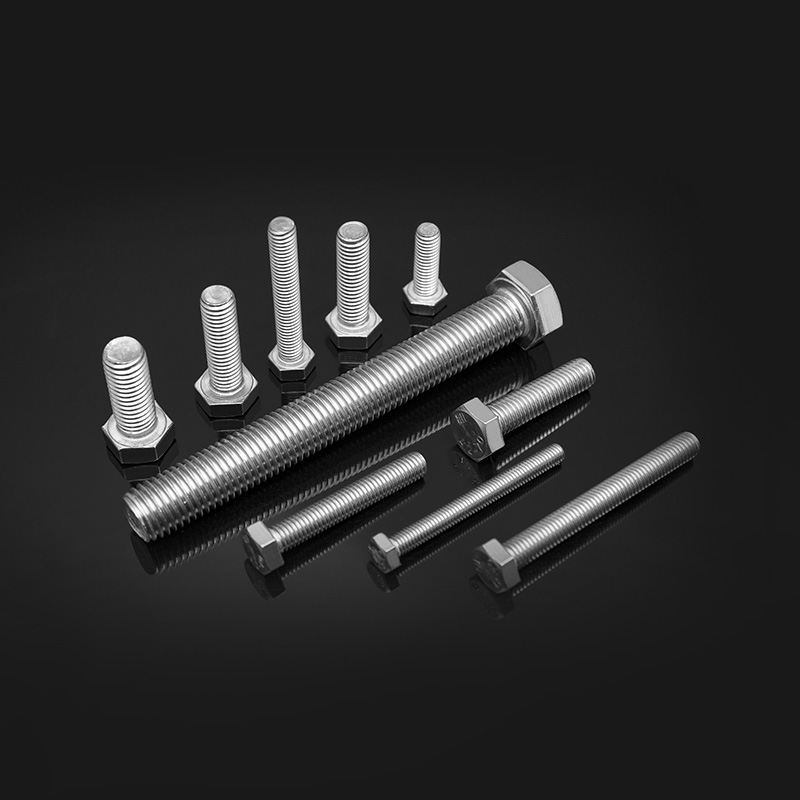
ThreadTolerance: 6gstandardDIN 13-15、DIN 13-12Rod diameter dd≤M20:A2-70、A4-70;M20<d≤M39:A2-50、A4-50;d≥M39:C3、C4;d<M39
See Details
Copyright © Jiangsu Huajie Stainless Steel Products Co., Ltd. All Rights Reserved.