eng
eng English
 русский
 Deutsch
 عربى
عربى
+86 189 6101 2359
+86 133 6521 5663
+86 138 5268 6835
Content
Stainless steel screws are among the most widely used fasteners in construction, marine engineering, food processing, medical equipment, and consumer electronics — yet they are routinely selected based on price or appearance alone. That approach leads to premature corrosion, galvanic failure, stripped drive recesses, and structural compromises that cost far more to fix than the screws themselves. With stainless steel fastener grades spanning from basic 18-8 austenitic alloys to duplex and super-austenitic compositions, and with dozens of head styles, drive types, and thread configurations available, an informed selection decision requires understanding nine critical parameters. This guide covers each one in practical, specific terms.
The alloy grade of a stainless steel screw determines its corrosion resistance, mechanical strength, and suitability for specific environments. Choosing the wrong grade is the single most common — and most costly — mistake in fastener selection.
Grade 304 (18-8) is the most widely used stainless steel screw grade, containing 18% chromium and 8% nickel. It performs reliably in indoor environments, light outdoor exposure, and freshwater contact. However, it is susceptible to crevice corrosion and pitting in chloride-rich environments such as coastal locations or swimming pools. Grade 316 adds 2–3% molybdenum to the 304 composition, dramatically improving chloride resistance and making it the correct choice for marine hardware, chemical processing equipment, and coastal construction. Grade 410 is a martensitic stainless steel with higher tensile strength (up to 1,000 MPa) but lower corrosion resistance — used where mechanical load matters more than chemical exposure. For highly aggressive environments, Grade 2205 duplex or 904L super-austenitic grades offer superior resistance but at significantly higher cost. The table below summarizes the most relevant grade distinctions:
| Grade | Key Composition | Corrosion Resistance | Typical Application |
|---|---|---|---|
| 304 (A2) | 18% Cr, 8% Ni | Good (non-marine) | Indoor, mild outdoor |
| 316 (A4) | 16–18% Cr, 10–14% Ni, 2–3% Mo | Excellent (chloride) | Marine, coastal, chemical |
| 410 | 11.5–13.5% Cr | Moderate | High-load, low-moisture |
| 2205 Duplex | 22% Cr, 5% Ni, 3% Mo | Superior | Offshore, chemical plants |
In international fastener specifications (ISO 3506), stainless steel screws are classified as A2 (equivalent to 304) or A4 (equivalent to 316), followed by a property class number indicating tensile strength. For example, A2-70 indicates grade 304 stainless with a minimum tensile strength of 700 MPa, while A4-80 indicates grade 316 with 800 MPa minimum tensile strength. This designation system is used consistently across European suppliers and is increasingly common in global procurement. Specifying A4-70 when you need marine-grade corrosion resistance and moderate load capacity is cleaner and less error-prone than referring to grade 316 alone.
Tensile strength is the maximum stress a screw can withstand before fracture, but the more practically useful value is the proof load — the maximum axial force a fastener can sustain without permanent deformation. For an A2-70 stainless screw (M8, for example), the proof load is approximately 18.6 kN, while the tensile load capacity is 25.1 kN. Engineers designing bolted joints should size connections based on proof load, not tensile strength, to ensure screws remain elastic under service loads. It is also important to note that austenitic stainless steels (304, 316) cannot be heat-treated to increase strength — their mechanical properties are determined by cold working during manufacturing.
Galling — also called cold welding or seizing — occurs when two stainless steel surfaces under contact pressure experience adhesive wear and micro-weld together during tightening. It is particularly common with austenitic grades and can render a fastener permanently locked at any torque level, even below the intended clamp load. Preventive measures include applying anti-seize compounds (nickel-based or molybdenum-disulfide formulations), using fasteners with different hardness values on mating surfaces, reducing installation speed (hand-tightening the last several turns), and considering stainless screws with a PTFE or wax coating. Stainless galling is not a material defect — it is a predictable tribological phenomenon that proper installation practice eliminates.
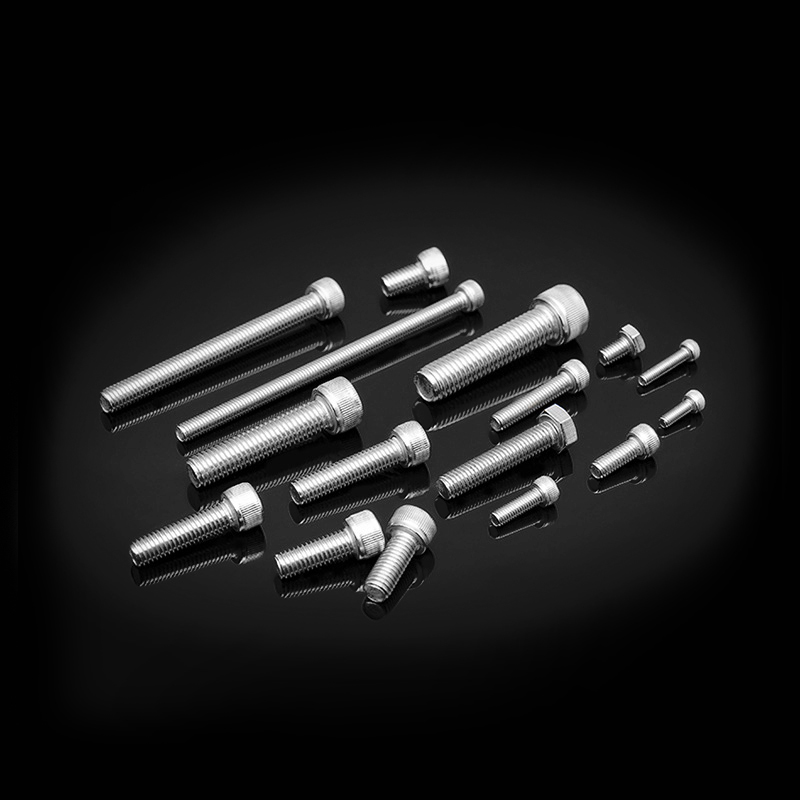
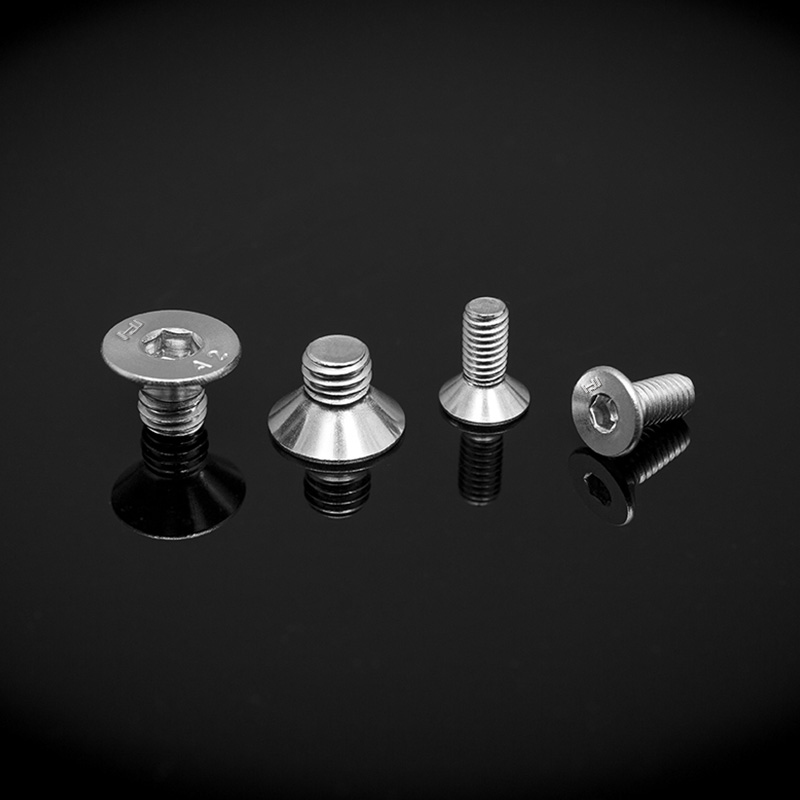
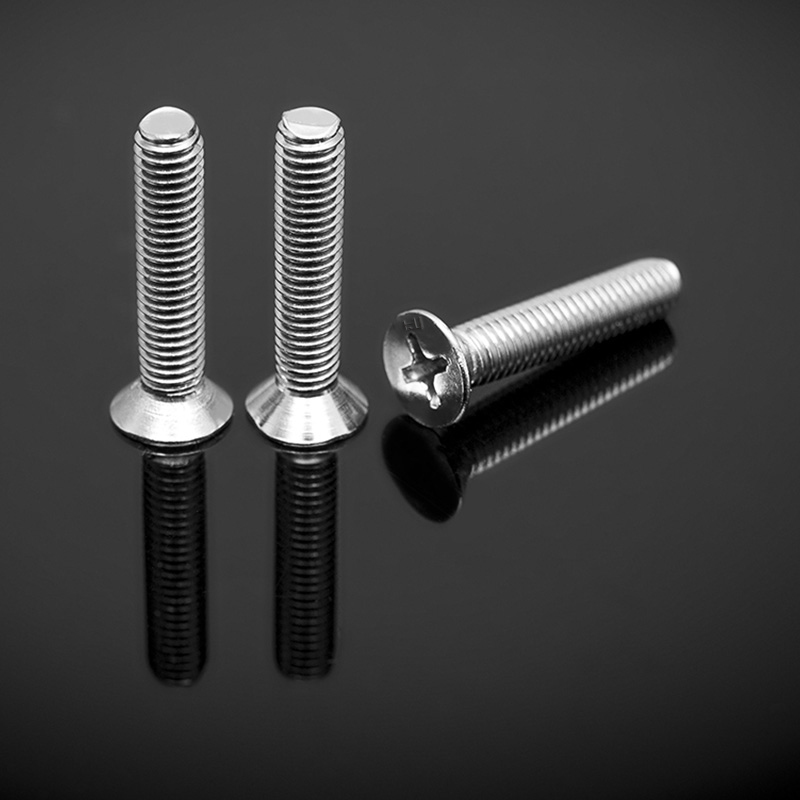
The screw head style affects how clamping load is distributed across the joint and whether the screw must sit flush with the surface. Pan head and hex head screws present a large bearing surface, distributing load across a wide area and minimizing surface deformation — preferred for structural joints. Countersunk (flat head) screws sit flush with or below the surface, required in applications where protrusion causes interference, such as hinges, panel fastening, or aerodynamic surfaces. Button head screws offer a low-profile dome with greater bearing area than countersunk types, widely used in consumer electronics and furniture hardware. For outdoor or marine applications, avoid internal hex (socket) heads in exposed locations where water pooling inside the recess accelerates crevice corrosion — pan or button heads are preferable.
The drive recess determines how efficiently torque is transferred from the tool to the screw and how likely cam-out (driver slipping from the recess) is under high torque. Phillips (PH) drives are designed to cam out under excessive torque — intentionally, to prevent overtightening — but this makes them unreliable for high-torque stainless applications. Pozidriv (PZ) drives offer superior torque transfer and resist cam-out better than Phillips despite similar appearance. Torx (star drive) provides the best torque transfer efficiency with virtually zero cam-out, making it the preferred drive for stainless screws in structural, automotive, and marine applications. Hex socket (Allen) drives offer excellent torque for machine screws but are vulnerable to rounding under high load if tool fit is imperfect. Always match driver bit size precisely to recess size — a worn or mismatched bit destroys stainless drive recesses quickly due to the material's hardness.
Stainless steel screws are available in coarse thread (UNC or metric coarse) and fine thread (UNF or metric fine) configurations. Coarse threads are more resistant to cross-threading, easier to install quickly, and better suited for softer materials such as aluminum, plastic, and wood composites where thread stripping is the primary risk. Fine threads provide greater tensile strength per unit length due to larger stress area, are more resistant to vibration loosening, and offer better adjustability in precision assemblies. For self-tapping stainless screws used in sheet metal, thread-forming types (which displace material without cutting) create stronger threads than thread-cutting types in ductile metals, while thread-cutting points are needed for harder substrates and brittle materials where chip clearance is required.
Stainless steel sits high on the galvanic series, meaning it will act as the cathode and accelerate corrosion in metals it contacts that are lower on the series — including carbon steel, aluminum, and zinc. When stainless screws are used with aluminum components in the presence of an electrolyte (moisture, salt water), the aluminum corrodes preferentially and aggressively. Mitigation strategies include using nylon or PTFE washers to isolate dissimilar metals, applying dielectric grease at the joint interface, specifying a smaller stainless screw relative to the aluminum part (to minimize cathode-to-anode area ratio), or switching to aluminum or titanium fasteners where galvanic compatibility is a primary constraint. Stainless-to-stainless joints present no galvanic risk, provided both components are the same grade.

The market for stainless steel fasteners includes a significant volume of counterfeit or mislabeled product — particularly screws marked as 316 that are actually 304, or austenitic grades that contain insufficient nickel content to meet specification. A simple field test using a magnet provides a first-pass check: fully austenitic 304 and 316 should be only weakly magnetic or non-magnetic, while strongly magnetic response suggests a ferritic or carbon steel core. For critical applications, request material test reports (MTRs) certifying chemical composition, dimensional inspection reports confirming thread gauging, and proof that product was manufactured to recognized standards such as ISO 3506, ASTM F738M, or DIN 267. Purchasing from verified distributors with lot traceability documentation is the most reliable protection against substandard product entering structural or safety-critical applications.
Surface condition also matters independently of grade. Stainless screws should arrive with a bright, uniform passive layer — free from heat tint, scale, embedded iron particles from machining, or mechanical damage. Passivation treatment (citric or nitric acid bath per ASTM A967) restores and enhances the natural chromium oxide protective layer after machining or forming operations, and should be specified for any stainless fasteners used in food contact, pharmaceutical, or marine environments where maximum corrosion resistance is required from day one of service.
Applying the nine points above is straightforward when condensed into a pre-purchase verification checklist. Before placing any stainless screw order — whether for a batch of 50 or 50,000 — confirm the following:
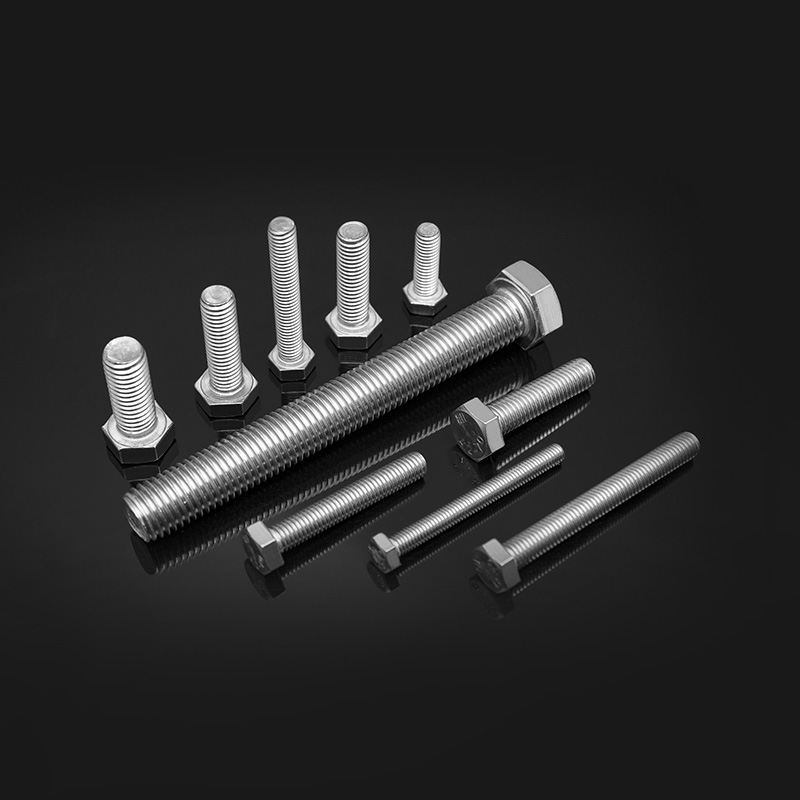
ThreadTolerance: 6gstandardDIN 13-15、DIN 13-12Rod diameter dd≤M20:A2-70、A4-70;M20<d≤M39:A2-50、A4-50;d≥M39:C3、C4;d<M39
See Details
Copyright © Jiangsu Huajie Stainless Steel Products Co., Ltd. All Rights Reserved.