eng
eng English
 русский
 Deutsch
 عربى
عربى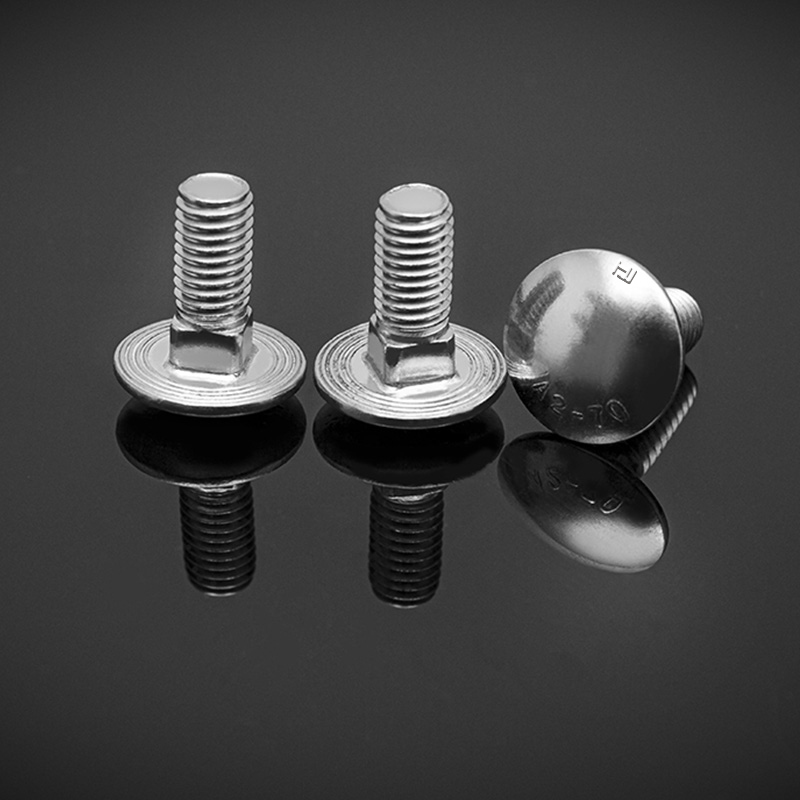
+86 189 6101 2359
+86 133 6521 5663
+86 138 5268 6835
Stainless steel fasteners — including stainless steel screws, stainless steel bolts, stainless steel hexagon head bolts, stainless steel nuts, stainless steel hexagon nuts, and stainless steel threaded rod — are the definitive choice when corrosion resistance, long service life, and structural integrity must coexist. The right grade and specification of stainless steel fastener eliminates the rust, galvanic failure, and premature replacement cycles that plague carbon steel hardware in demanding environments. This guide covers grade selection, product types, mechanical performance, and the practical criteria that determine which fastener is correct for a given application.
Content
Carbon steel fasteners rely on surface coatings — zinc plating, hot-dip galvanizing, or organic coatings — to resist corrosion. These coatings are barriers, not inherent material properties, and they fail at cut edges, thread contact zones, and through mechanical damage during installation. Once the coating is breached, rust propagates rapidly beneath the surface, often invisibly, until structural failure or seizure occurs.
Stainless steel fasteners resist corrosion through a self-regenerating chromium oxide passive film on the metal surface. This film requires a minimum of 10.5% chromium content by mass to form and reforms spontaneously when scratched or cut, as long as oxygen is present. In outdoor, marine, food processing, and chemical environments, stainless steel screws and bolts consistently outlast zinc-plated equivalents by 10–25 years, eliminating repeat replacement costs and reducing maintenance access requirements.
| Fastener Material | Salt Spray Hours to First Rust | Typical Service Life (Marine) |
|---|---|---|
| Zinc-plated Carbon Steel | 96–200 hrs | 1–3 years |
| Hot-Dip Galvanized Steel | 500–1,000 hrs | 5–10 years |
| Stainless Steel A2 (304) | >500 hrs | 15–25 years |
| Stainless Steel A4 (316) | >1,000 hrs | 25+ years |
The ISO 3506 standard classifies stainless steel fasteners using a letter-number system: the letter denotes the alloy family (A for austenitic, the most common), and the number denotes the specific alloy. For the vast majority of stainless steel screws, bolts, nuts, and threaded rod, buyers will encounter A2 and A4 as the two dominant grades.
Within each grade, ISO 3506 assigns property classes based on minimum tensile and yield strength. For stainless steel bolts and screws, the most common are A2-70 and A4-80, where the number represents the minimum tensile strength in units of 10 MPa (i.e., A2-70 = 700 MPa minimum tensile strength). A4-80 fasteners provide 800 MPa tensile strength and are specified for structurally demanding applications in corrosive environments, such as offshore platform connections and chemical reactor assembly.
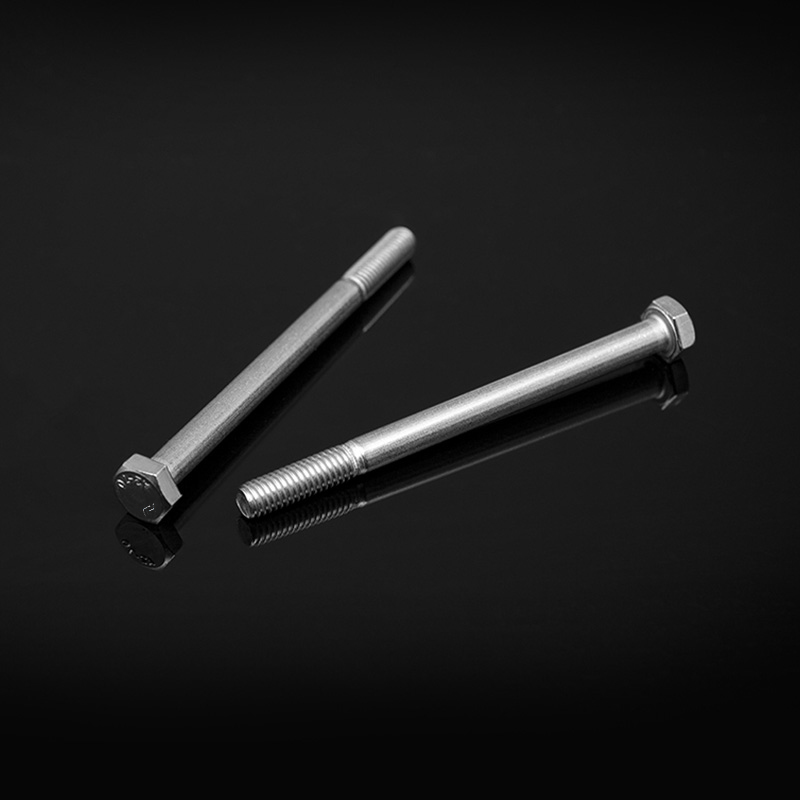
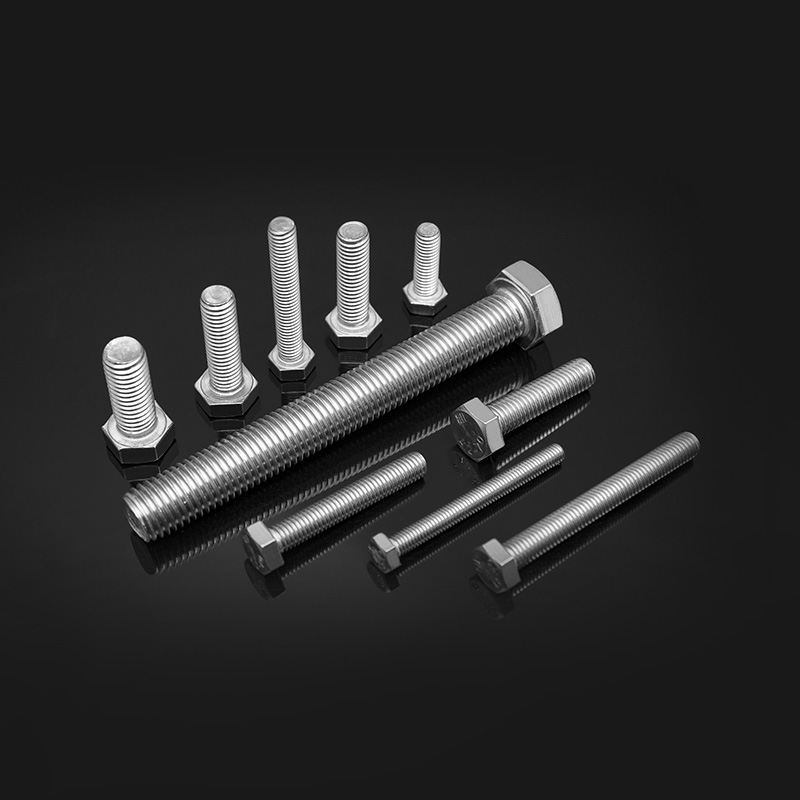
Stainless steel hexagon head bolts are the most widely specified structural fastener in stainless steel, used in construction, machinery, process equipment, marine hardware, and infrastructure. They are fully standardized under ISO 4014 (partially threaded) and ISO 4017 (fully threaded), with dimensional equivalents under DIN 931 and DIN 933 respectively in German engineering specifications, and ASME B18.2.1 in North American practice.
| Size | Thread Pitch (Coarse) | Across Flats (mm) | Proof Load (kN) A2-70 |
|---|---|---|---|
| M6 | 1.0 mm | 10 | 7.2 |
| M8 | 1.25 mm | 13 | 13.5 |
| M10 | 1.5 mm | 17 | 21.8 |
| M12 | 1.75 mm | 19 | 31.8 |
| M16 | 2.0 mm | 24 | 59.4 |
| M20 | 2.5 mm | 30 | 92.1 |
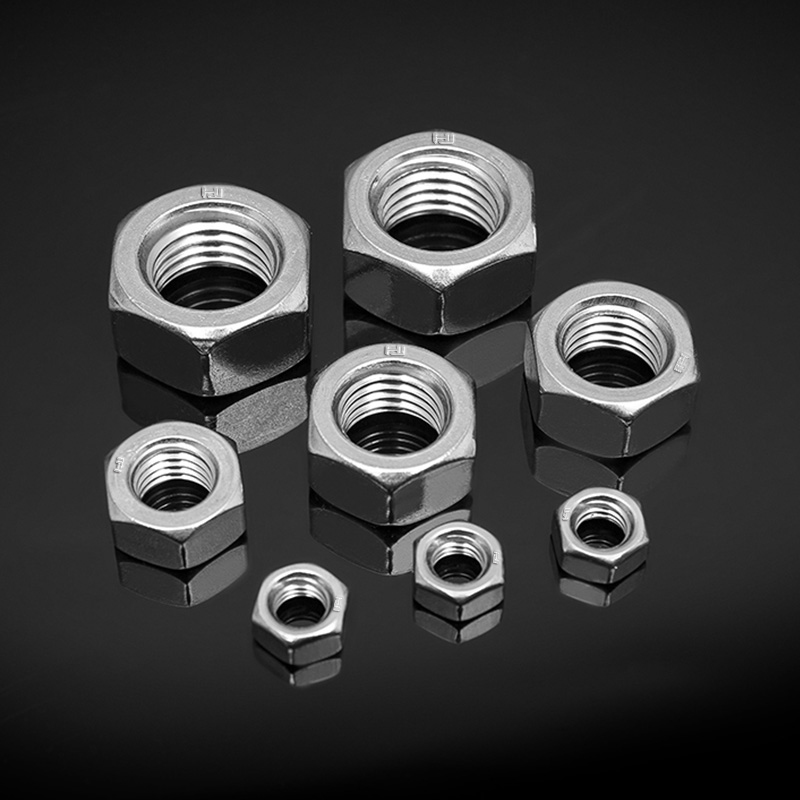
Stainless steel nuts must always be specified to match the grade and property class of the bolt they are paired with. Using a lower-grade nut with a higher-grade bolt transfers the failure point to the nut threads, causing stripping under load before the bolt reaches its design proof load. A4-80 bolts should always be paired with A4-80 nuts — never with A2-70 nuts in high-load or safety-critical joints.
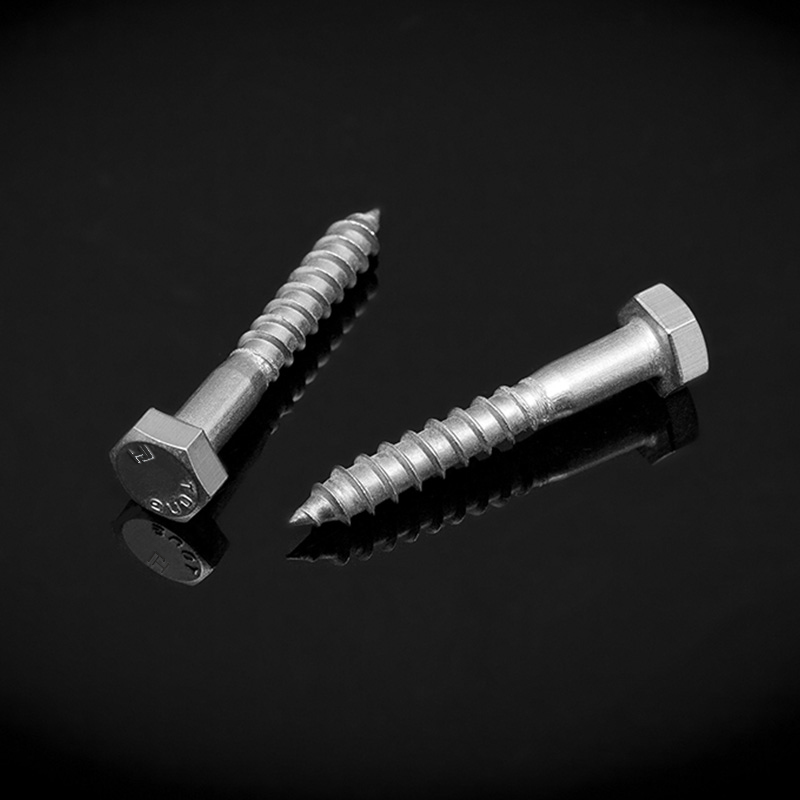
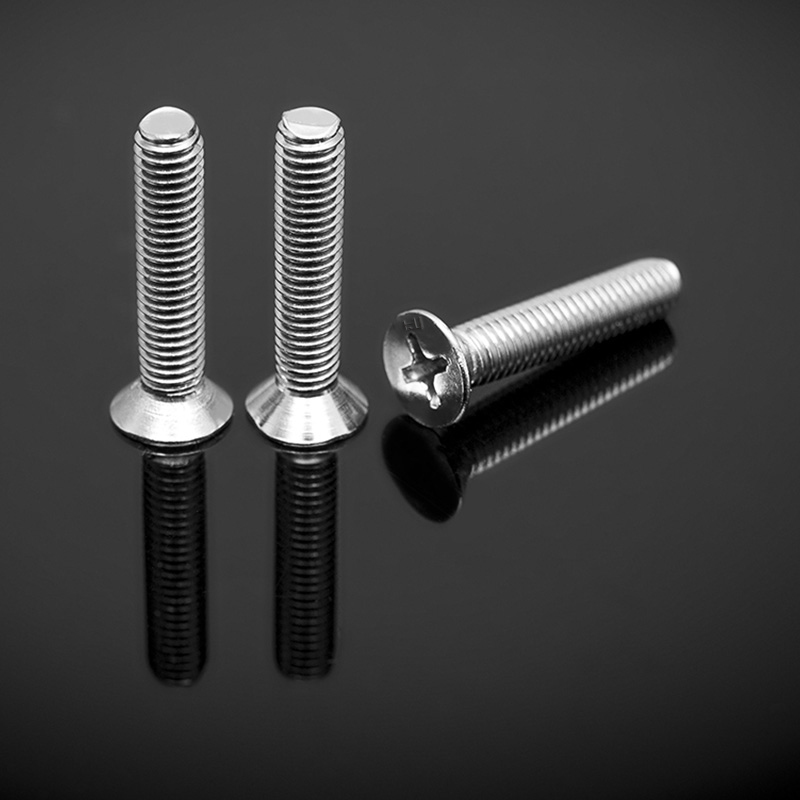
Stainless steel screws encompass an enormous product range — machine screws, self-tapping screws, wood screws, self-drilling screws, and socket cap screws — each engineered for specific material, load, and access constraints. Selecting the wrong screw type is among the most common and preventable causes of joint failure in light fabrication, construction fitout, and equipment assembly.
| Screw Type | Common Head Forms | Drive Type | Typical Application |
|---|---|---|---|
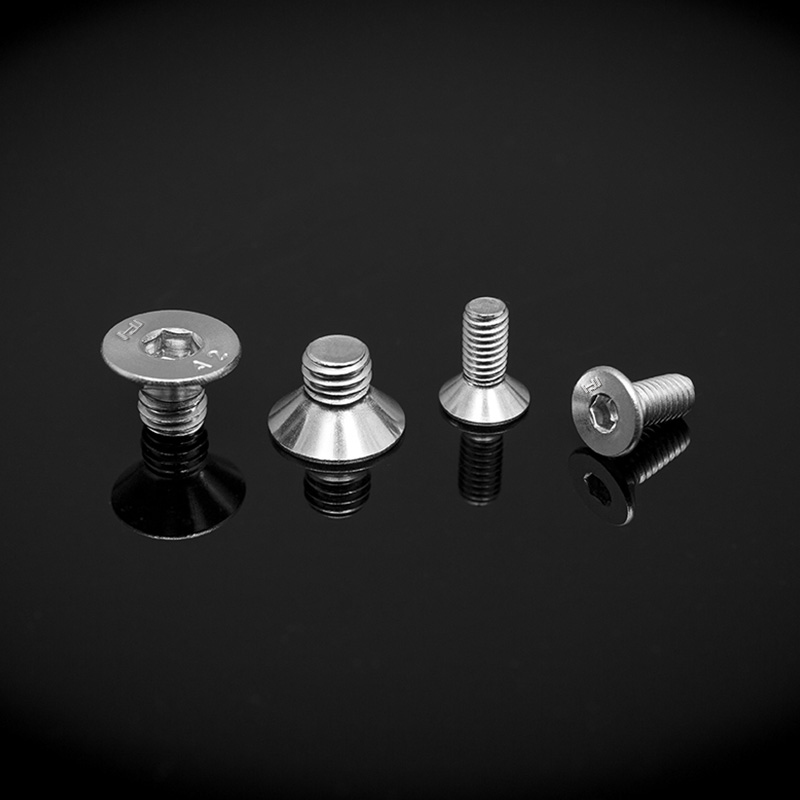
| Machine Screw | Pan, Countersunk, Cheese | Phillips, Slotted, Torx | Into tapped holes, with nuts, equipment panels |
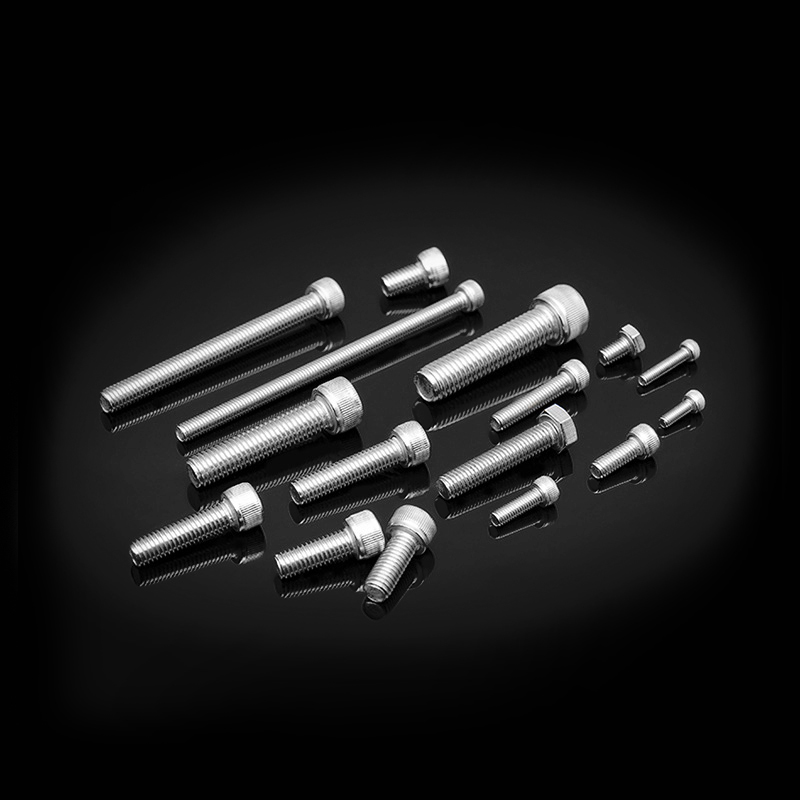
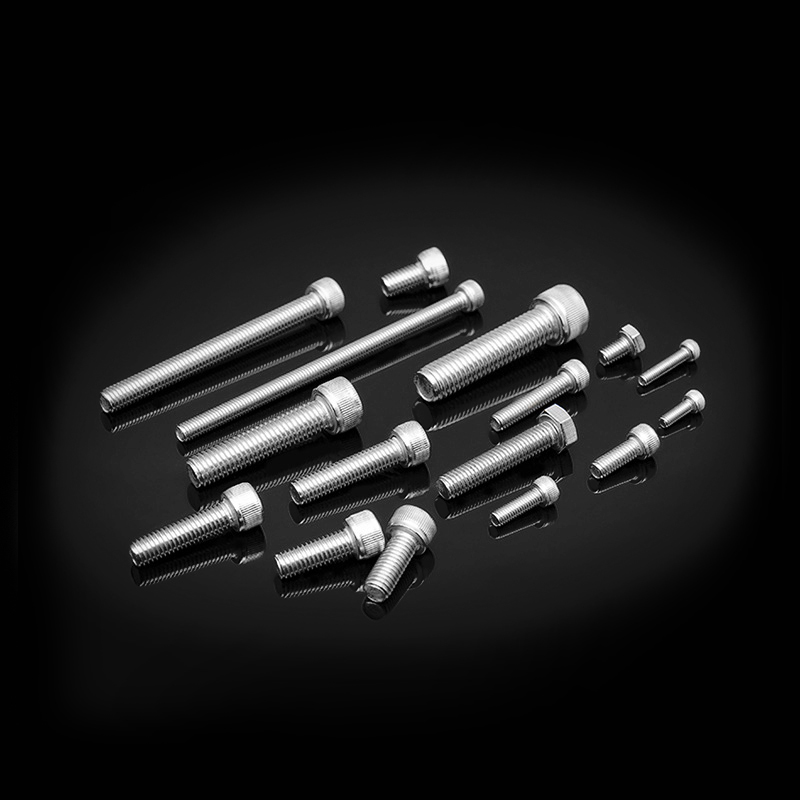
| Socket Cap Screw | Cylindrical cap | Hex Allen key | High-load precision assemblies, machinery |
| Self-Tapping Screw | Pan, Hex Washer, Countersunk | Phillips, Torx | Sheet metal, thin gauge fabrication |
| Wood Screw | Countersunk, Raised | Phillips, Torx, Slotted | Decking, cladding, joinery |
| Self-Drilling Screw (TEK) | Hex Washer | Hex driver | Steel purlins, roofing, cladding |
For exterior timber decking and cladding applications, A4 stainless steel wood screws with a Torx drive are strongly preferred over Phillips drive. Torx geometry transfers torque more efficiently and resists cam-out, which is particularly important in hardwood species like Ipe or Jarrah where driving torque is high and screw head damage creates both aesthetic and corrosion entry point problems.
Stainless steel threaded rod — also called studding or allthread — is a fully threaded cylindrical bar supplied in standard lengths of 1 metre or 3 metres, used where custom bolt lengths are needed, where through-bolting of thick sections is required, or where anchor bolts must be cut to specific site dimensions. Standard metric thread forms follow ISO 724, with coarse thread being predominant.
Stainless steel work hardens rapidly when cut with dull tools or excessive heat. For clean cuts that preserve thread profile at the cut end, use an angle grinder with a thin stainless-specific cutting disc, or a hacksaw with a 32 TPI (teeth per inch) blade for smaller diameters. Threading a nut past the cut point before cutting, then removing it after, restores any minor burring on the thread crests. Never use standard high-speed steel dies on stainless threaded rod without appropriate cutting lubricant — galling will occur.
Galling is the adhesive wear mechanism that causes stainless steel nuts and bolts to seize together during tightening, often making them impossible to remove without destruction. It occurs because the passive oxide films on mating stainless steel surfaces rupture under the heat and pressure of thread contact, causing metal-to-metal adhesion and thread material transfer. Galling is entirely preventable with correct practice, but it is the single most common installation failure mode with stainless steel fasteners.
With the full range of stainless steel screws, bolts, hexagon head bolts, nuts, hexagon nuts, and threaded rod available, the selection process should follow a structured logic that starts with environment, then mechanical requirements, then geometry.
ThreadTolerance: 6gstandardDIN 13-15、DIN 13-12Rod diameter dd≤M20:A2-70、A4-70;M20<d≤M39:A2-50、A4-50;d≥M39:C3、C4;d<M39
See Details
Copyright © Jiangsu Huajie Stainless Steel Products Co., Ltd. All Rights Reserved.