eng
eng English
 русский
 Deutsch
 عربى
عربى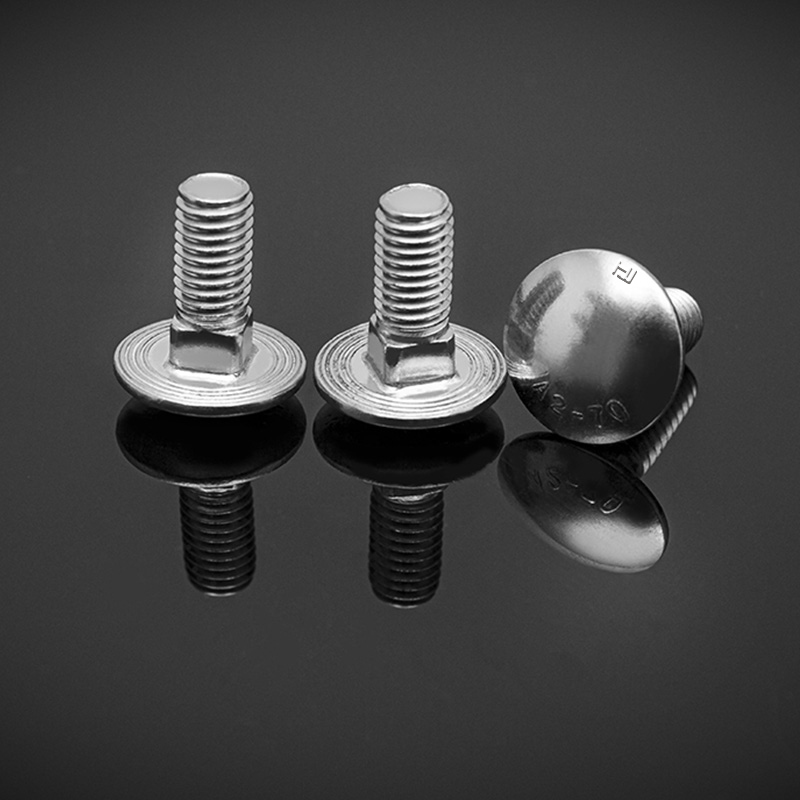
+86 189 6101 2359
+86 133 6521 5663
+86 138 5268 6835
Measuring the length of a bolt is one of those jobs that looks trivial until a crate of fasteners arrives and somebody asks whether the 60 mm on the drawing includes the head. We have been manufacturing stainless steel fasteners since 2003, and this question still comes up in almost every training session on our shop floor. The short answer is that it depends on the type of bolt in your hand. The longer answer is worth ten minutes of your time, because it decides whether an assembly closes up cleanly the first time or comes back as a rejected delivery.
Content
A bolt that is a few millimetres short will not develop full thread engagement, which weakens the joint long before anyone notices. A bolt that is too long may bottom out in a blind hole, leave exposed threads that snag and collect corrosion, or simply add weight and cost to every unit you ship. In high-vibration environments such as rail, wind and chemical plant equipment, that difference matters even more.
The confusion is understandable, because "length" is defined differently across fastener families. DIN, ISO, ANSI, JIS and GB each spell out the dimension clearly, but the rules are not identical from one product family to the next. Once you know which rule applies to the fastener in your hand, measuring becomes a ten-second job instead of a debate.
For the great majority of bolts and screws with a flat bearing surface beneath the head, the length runs from the underside of the head to the very tip of the shank. The head height is not part of the length. A hexagon head bolt described as M10 x 60 measures 60 mm from the bottom face of the head down to the end of the shank, and the head itself may add another 6 to 7 mm on top of that.
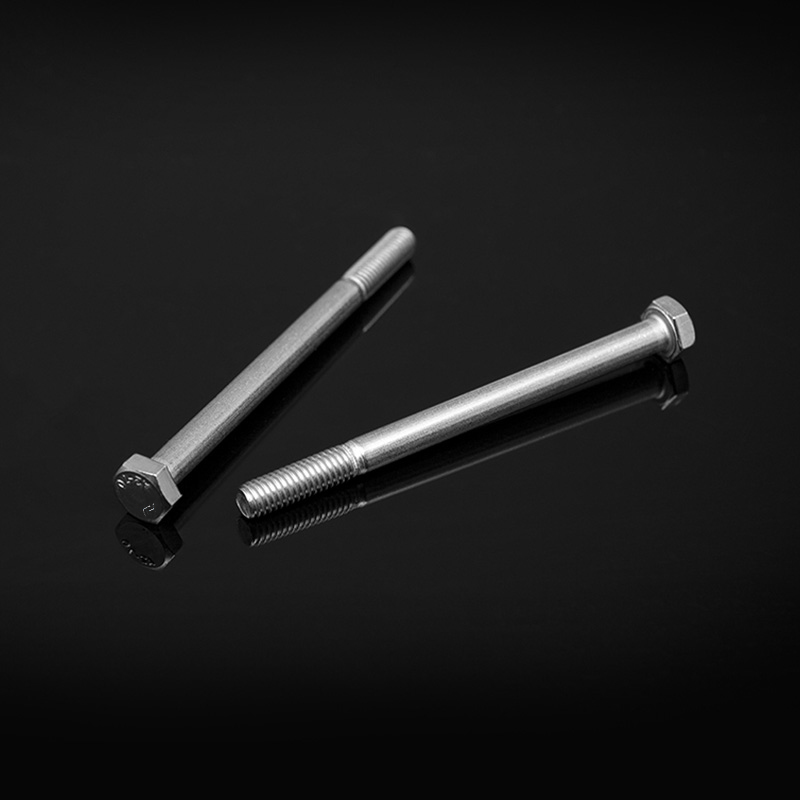
This rule covers hexagon head bolts such as DIN 931 (partial thread) and DIN 933 (threaded up to the head), hexagon socket head cap screws, hexagon flange bolts, and most machine screws with a plain head. If you are comparing options across our stainless steel bolts, DIN 931 and DIN 933 are the two families you will see most often in drawings, and they follow exactly the same length convention even though their thread lengths differ.
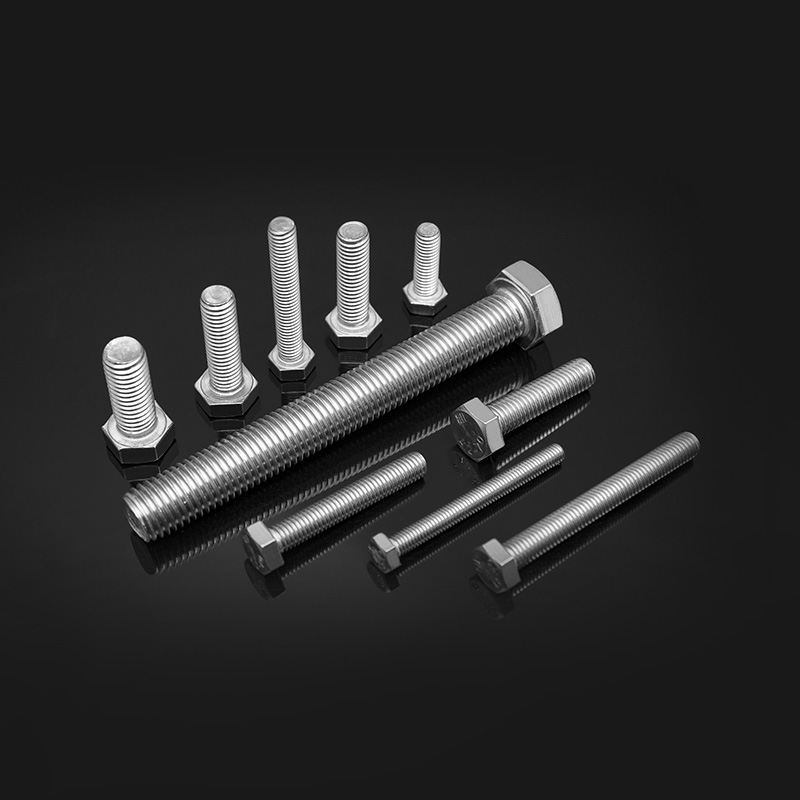 DIN933 Stainless Steel Fully Threaded Hexagon Head BoltsFully threaded stainless steel hexagon head bolts for heavy-duty connections, available in metric sizes from M1.6 to M52, following standard under-head length convention.View Product →
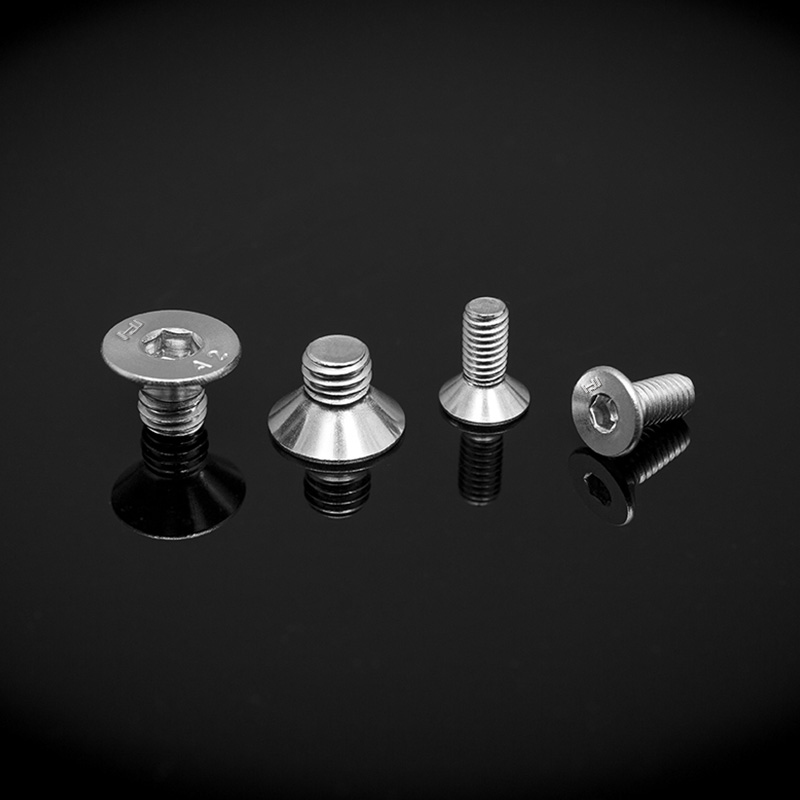
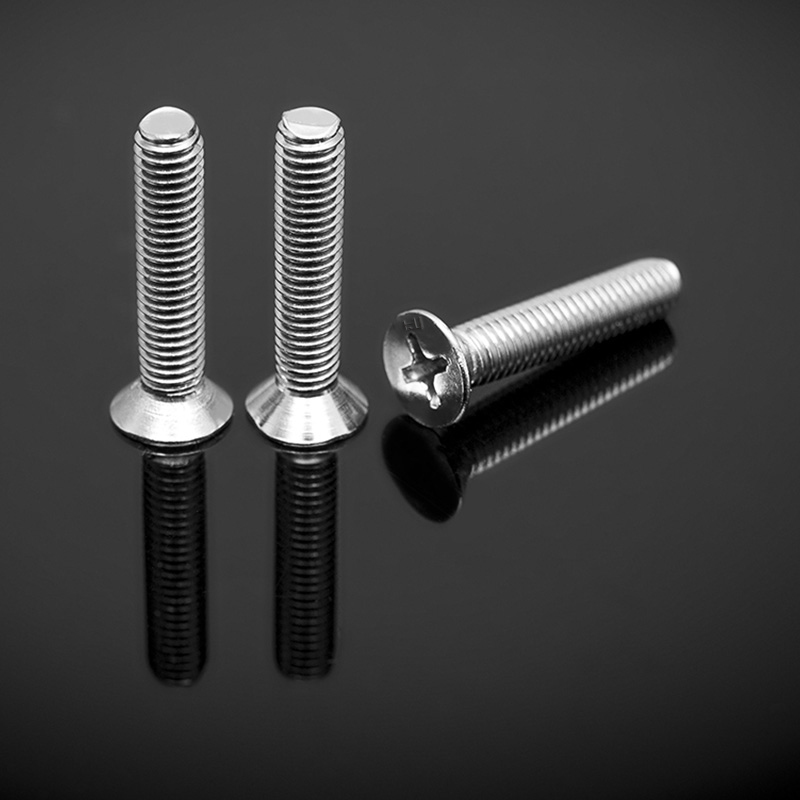
When the head is designed to sit flush inside a countersink, the length includes the head. You measure from the top surface of the head, in other words the plane where the head meets the surrounding material, down to the tip. Hexagon socket countersunk head screws to DIN 7991 and cross recessed countersunk screws to DIN 965 are the classic examples, and they are common in panels, machine covers and anything that needs a smooth outer face.
Get this one wrong and the error is usually obvious but expensive: a countersunk screw ordered with the head excluded comes up short by the full head height, which is often 3 to 5 mm.
| Fastener type | Typical standard | Length measured from | Head included? |
|---|---|---|---|
| Hexagon head bolt, full thread | DIN 933 / ISO 4017 | Underside of head to tip | No |
| Hexagon head bolt, partial thread | DIN 931 / ISO 4014 | Underside of head to tip | No |
| Hexagon socket head cap screw | DIN 912 | Underside of head to tip | No |
| Hexagon socket countersunk screw | DIN 7991 | Top of head to tip | Yes |
| Cross recessed countersunk screw | DIN 965 | Top of head to tip | Yes |
| Mushroom head square neck bolt | DIN 603 | Underside of head to tip | No |
| Hexagon socket set screw | DIN 913 / 914 / 915 | Full length, point included | Not applicable |
| Threaded rod | DIN 975 | Full length, end to end | Not applicable |
| Double end stud | DIN 938 / DIN 939 | Full length, end to end | Not applicable |
A caliper, a thread pitch gauge and a clean bench will handle almost everything you meet in a maintenance store or an incoming inspection bay. Here is the sequence we recommend.
The same under-head approach applies to hexagon socket head cap screws, which are measured from the seating face of the cylindrical head to the tip.
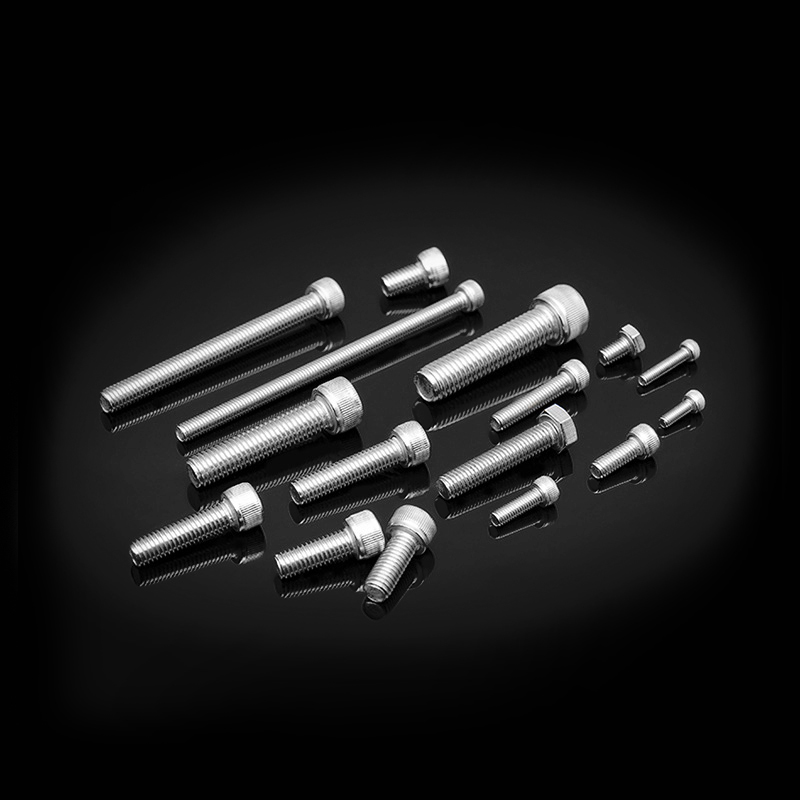 DIN 912 Stainless Steel Hexagon Socket Head Cap ScrewsStainless steel socket head cap screws with internal hex and full thread, measured under the head; available from M1.4 to M100 for torque connections.View Product →
For long runs of parts, a simple length gauge or a go and no-go fixture saves time and removes the human element from the reading.
On a partially threaded bolt, the quoted length tells you nothing about how much of the shank carries thread. That is covered by a separate formula, and it explains why two bolts of the same length can look quite different side by side.
Here d is the nominal thread diameter. The unthreaded shank length is then g = l minus b, where l is the bolt length. Take an M20 x 150 bolt: the thread length works out to 2 x 20 + 12 = 52 mm, leaving a plain shank of 98 mm. That plain shank is what bears against a hole in a shear joint, so it is the dimension a design engineer actually cares about.
Fully threaded bolts such as DIN 933 are threaded all the way to the head, so the thread length equals the bolt length. Two bolts of identical nominal length, one to DIN 931 and one to DIN 933, are interchangeable in many joints but not in all, because the plain shank of the DIN 931 version carries load differently.
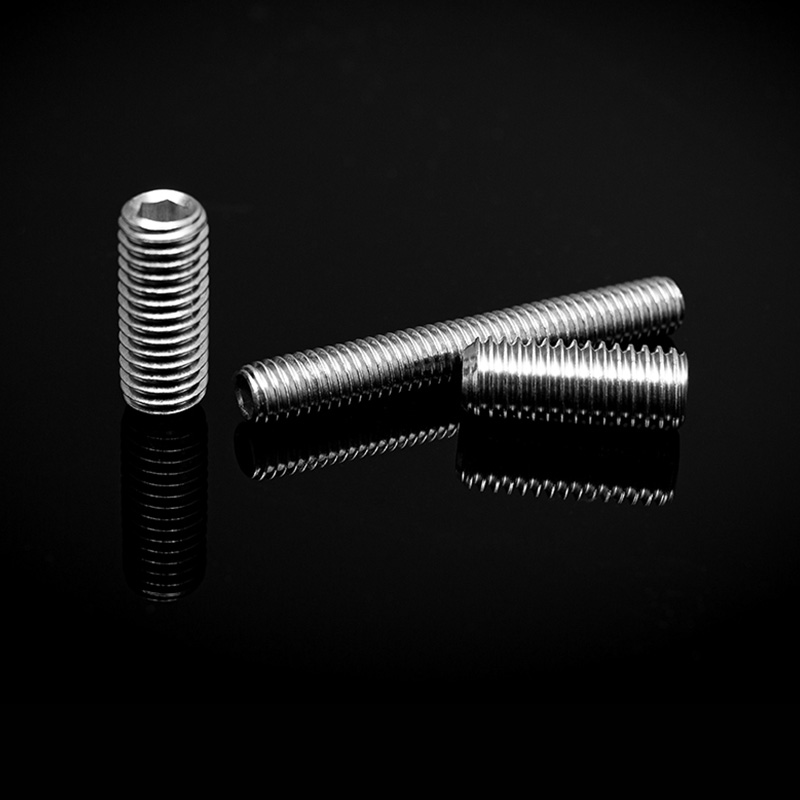
Threaded rods, studs and set screws have no head, so there is nothing to exclude. The length is measured from one end to the other. A DIN 975 threaded rod is quoted simply as M12 x 1000, meaning one metre of fully threaded bar, and a DIN 938 stud is quoted as its overall length with the thread lengths of each end specified separately.
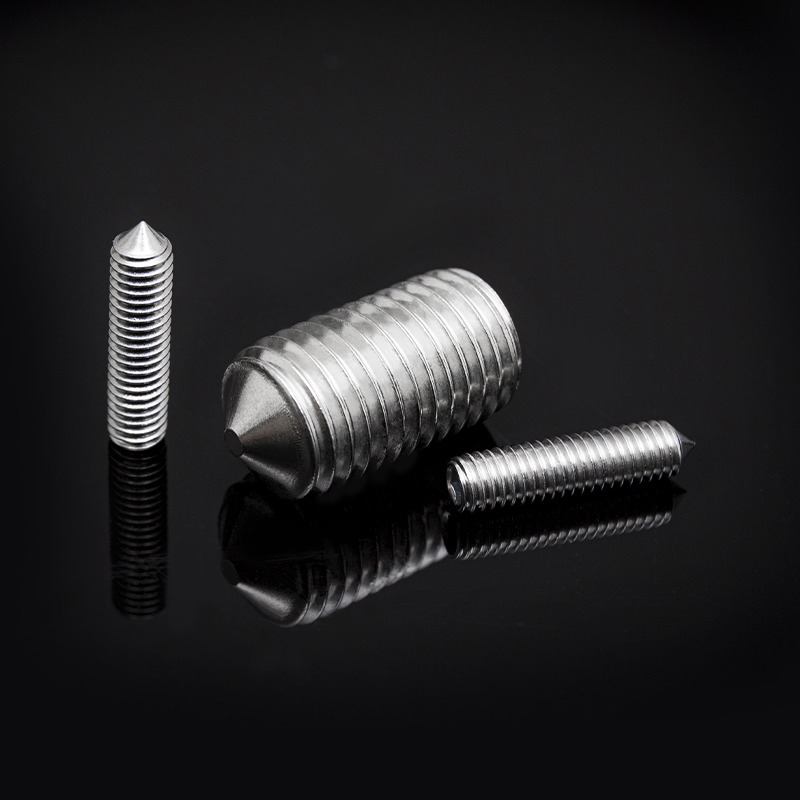
Set screws with a cone, flat or dog point are measured over the whole body including the point, because the point sits inside the assembly and takes up real space. If you are cutting threaded rod to size on site, account for the saw kerf and the loss of a few threads at the cut face; it is worth cutting slightly long and cleaning the end with a die nut rather than ending up short.
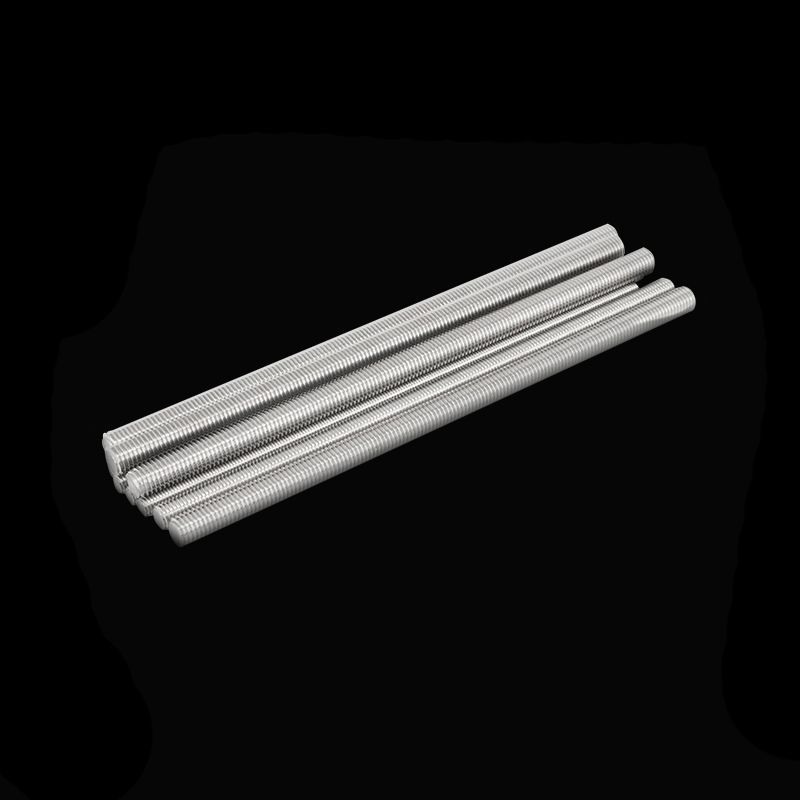 DIN 975 Stainless Steel Threaded Rods and StudsStainless steel threaded rods for adjustable connections and medium loads, available in M2 to M52 sizes; useful when cutting rods to length.View Product →
For projects that mix rods, studs and conventional bolts, keep the different measurement rules clearly labelled on the drawing. Most ordering errors we see come from a single unqualified callout such as "M16 x 200" with no fastener family attached.
After two decades of incoming inspection and customer support, these are the mistakes we see most often, and each one is easy to prevent.
A little discipline here protects both your assembly schedule and your relationship with your supplier.
The safest way to avoid any ambiguity is to write the full designation every time: nominal diameter, length, standard, material and, where it applies, the thread pitch. An entry such as M12 x 80 DIN 933 A4-70 tells a supplier everything needed to ship the correct part, whereas "M12 bolt 80 mm" can be read half a dozen ways.
Length tolerances are worth checking as well. Short fasteners are normally held to a tighter band than long ones, so a 1000 mm threaded rod and an M6 x 16 screw are not judged by the same yardstick. When a drawing specifies a critical length, state the tolerance rather than leaving it to the standard.
If you are still deciding between families before you order, our guide on how to choose the right stainless steel bolts for your project walks through material grade, thread type and environment in more detail. Measure carefully, write the callout in full, and the right bolt will arrive the first time.
ThreadTolerance: 6gstandardDIN 13-15、DIN 13-12Rod diameter dd≤M20:A2-70、A4-70;M20<d≤M39:A2-50、A4-50;d≥M39:C3、C4;d<M39
See Details
Copyright © Jiangsu Huajie Stainless Steel Products Co., Ltd. All Rights Reserved.