eng
eng English
 русский
 Deutsch
 عربى
عربى
+86 189 6101 2359
+86 133 6521 5663
+86 138 5268 6835
Content
Before any thread is formed on a stainless steel rod or stud, the starting blank has to reach the correct diameter and straightness through cold drawing or rolling. Cold drawing pulls the raw stainless steel wire or bar through a series of dies that progressively reduce diameter while improving surface finish and dimensional consistency, and this process also work-hardens the material slightly, which can be an advantage for load-bearing applications since it modestly increases tensile strength compared to the as-cast or as-rolled starting material. Rolling achieves similar diameter reduction through compressive deformation between rollers rather than tensile pulling through a die, and is generally favored for higher production volumes where the incremental efficiency gain matters across large batch sizes.
Both processes are chosen over machining the diameter from bar stock because they preserve the material's grain flow along the length of the rod rather than cutting across it, which contributes to better fatigue resistance in the finished product. However, longer threaded rods, particularly those exceeding a meter or more in length, often develop slight bow or curvature during the cold working process due to uneven internal stress relief, which is why a separate straightening operation is typically required afterward to bring the rod within acceptable straightness tolerance before thread rolling begins.
A short stud used to fasten two flanges together has minimal sensitivity to minor bow, since the nut engagement length is short relative to any curvature present. A long tooth bar used to connect scaffolding sections or adjust the span of a guardrail frame, however, can develop noticeable misalignment at the connection points if straightness tolerance is not tightly controlled, since even a small angular deviation compounds over the rod's full length. Buyers specifying long threaded rods for structural or frame applications should confirm the straightness tolerance the supplier is holding to, rather than assuming standard commercial tolerance is adequate for a length-sensitive assembly.
Thread rolling is the dominant production method for stainless steel threaded rods and studs because it forms the thread by displacing material outward under pressure from rolling dies, rather than cutting material away as turning does. This distinction matters beyond just production speed. Because thread rolling displaces rather than removes material, the resulting thread has continuous, unbroken grain flow following the thread's helical form, which gives a rolled thread meaningfully better fatigue strength than a cut thread of the same nominal dimensions, since the grain interruptions in a cut thread create stress concentration points where fatigue cracks are more likely to initiate under cyclic loading.
Thread turning, which removes material with a cutting tool to form the thread profile, remains necessary for certain situations despite its lower production efficiency. Non-standard thread pitches, unusually large diameters outside the practical range of standard rolling dies, or applications requiring extremely tight dimensional tolerance on thread form sometimes call for turning rather than rolling. Turning also avoids the slight diameter increase at the thread crest that rolling produces, which can matter in applications with a tightly constrained bore or nut clearance.
| Factor | Thread Rolling | Thread Turning |
| Fatigue strength | Higher, due to continuous grain flow | Lower, due to interrupted grain structure |
| Production efficiency | High, suited to mass production | Lower, more suited to small batches |
| Surface finish | Smooth, work-hardened surface | Good, but generally more tool-mark texture |
| Custom pitch or diameter flexibility | Limited by available die sizes | High, since tooling changes are simpler |
Tooth bars and threaded rods used as adjustable connectors in scaffolding, guardrail assembly, and similar frame structures are typically specified in austenitic grades such as 304 or 316, and the choice between them usually comes down to the corrosion environment rather than mechanical strength alone, since both grades offer broadly similar tensile properties in comparable cold-worked condition. Grade 304 provides solid general corrosion resistance suitable for most indoor construction and industrial frame applications, while grade 316 adds molybdenum content that meaningfully improves resistance to chloride-induced pitting corrosion, making it the better choice for outdoor scaffolding near coastal environments, applications exposed to de-icing salts, or industrial settings with chemical exposure.
For applications requiring higher tensile strength than standard austenitic grades provide, such as heavily loaded frame connections in industrial equipment guardrails, precipitation-hardening stainless grades or cold-worked high-strength austenitic variants can be specified, though these typically come at higher material cost and may require the supplier to confirm compatible thread rolling parameters, since higher-strength stainless alloys behave differently under the pressure of thread rolling dies compared to standard 304 or 316 stock.
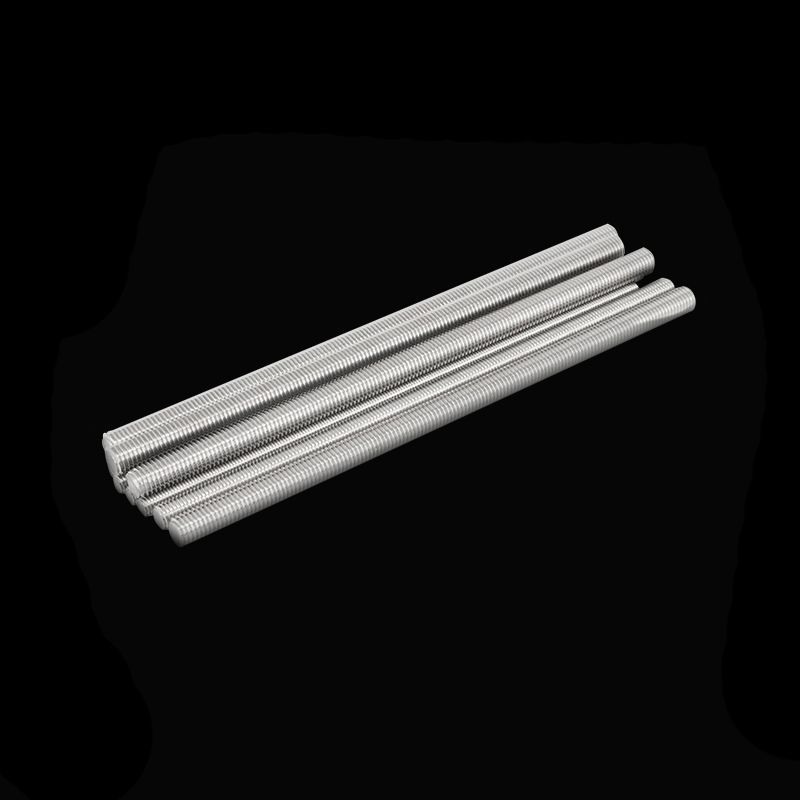
The core function of a tooth bar as an adjustable connector depends on the interaction between the rod's thread and the mating nut remaining reliable across repeated adjustment cycles, particularly in frame structures that are disassembled and reinstalled frequently, such as guardrails around industrial equipment that periodically needs servicing. Thread engagement length matters more here than it might first appear; a nut engaged over too short a thread length can strip under load, especially in stainless steel, which has a tendency toward galling, a form of adhesive wear where mating threaded surfaces can seize or tear under friction and pressure, particularly when the same alloy is used for both the rod and the nut.
Buyers sourcing threaded rods and studs in bulk for construction or industrial frame applications benefit from verifying a few specific quality points rather than relying solely on a general material certificate. Thread pitch diameter and profile should be checked against the applicable standard using a thread gauge on a sampling basis, since a rolled thread that is out of tolerance on pitch diameter can either bind against a standard nut or fit too loosely, undermining the connection's reliability under load.
Straightness verification, particularly for longer rods intended for scaffolding or frame spans, should be checked over the full length rather than assumed from the supplier's process description, since even a well-controlled straightening process can produce occasional out-of-tolerance pieces within a batch. For applications with any structural load-bearing function, requesting mechanical property verification, such as tensile strength testing on sample rods from the production batch, provides assurance that the cold working and thread rolling process has not introduced unexpected embrittlement or strength reduction relative to the base material specification.
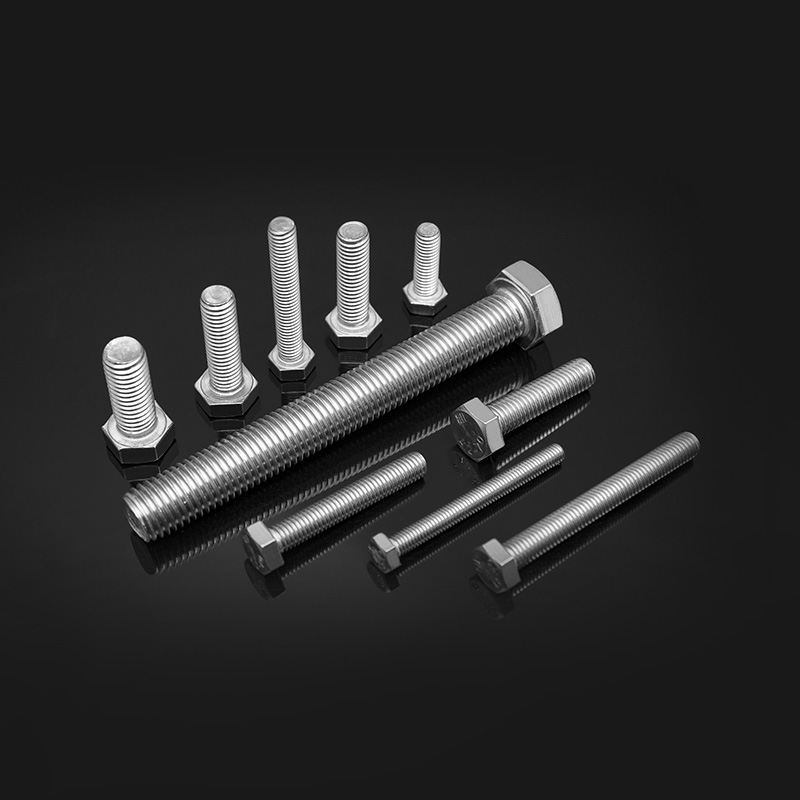
ThreadTolerance: 6gstandardDIN 13-15、DIN 13-12Rod diameter dd≤M20:A2-70、A4-70;M20<d≤M39:A2-50、A4-50;d≥M39:C3、C4;d<M39
See Details
Copyright © Jiangsu Huajie Stainless Steel Products Co., Ltd. All Rights Reserved.