eng
eng English
 русский
 Deutsch
 عربى
عربى
+86 189 6101 2359
+86 133 6521 5663
+86 138 5268 6835
Content
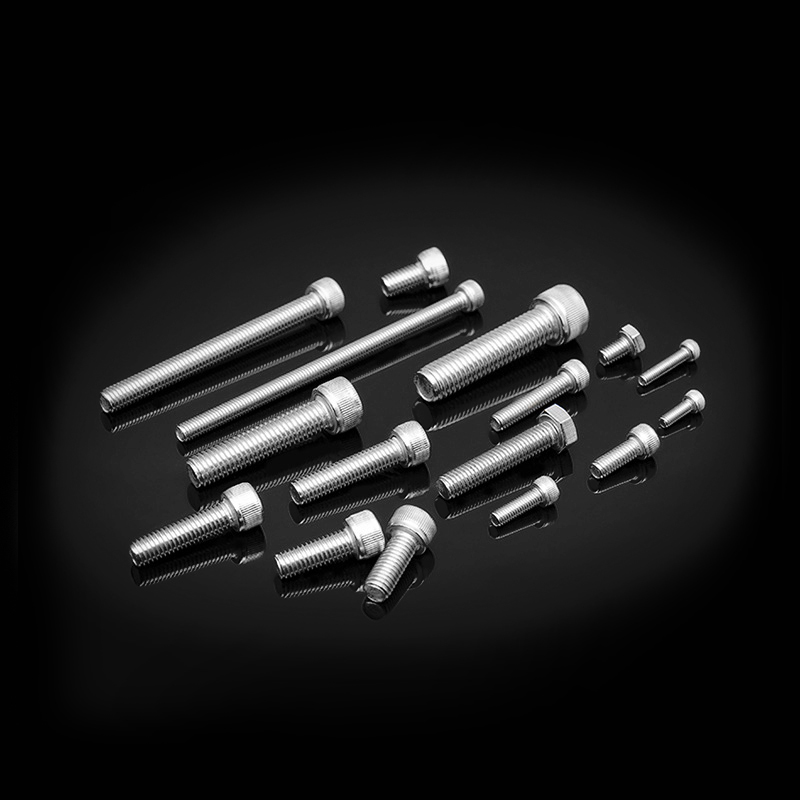
Stainless steel fasteners are mechanical components used to join, secure, or position two or more parts together. What sets them apart from standard carbon steel fasteners is their composition — they contain a minimum of 10.5% chromium, which reacts with oxygen to form a passive oxide layer on the surface. This invisible film continuously self-repairs, giving stainless steel fasteners exceptional resistance to rust, corrosion, and staining across a wide range of environments. Whether you are working in marine construction, food processing, chemical plants, outdoor architecture, or everyday household applications, stainless steel fasteners deliver long-term reliability that other materials simply cannot match.
The most commonly used grades for stainless steel fasteners are 304 and 316. Grade 304 is suitable for general-purpose applications including indoor construction, machinery, and light outdoor use. Grade 316 contains molybdenum, which enhances its resistance to chlorides and saltwater, making it the preferred choice for coastal, marine, and chemical environments. Understanding these grades helps you select the right fastener for the right job — a decision that directly affects the longevity and safety of your assembly.
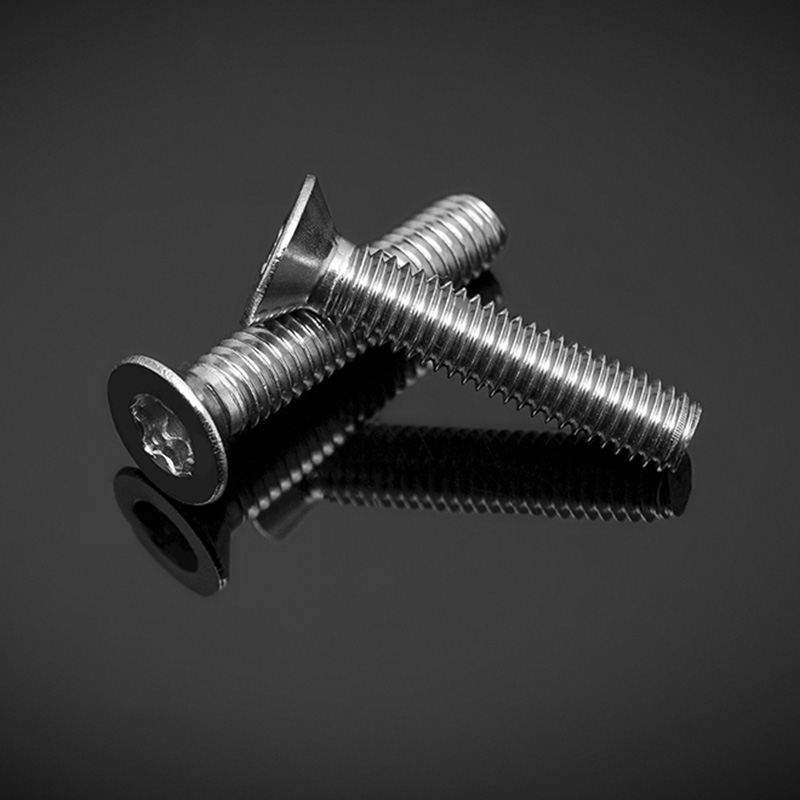
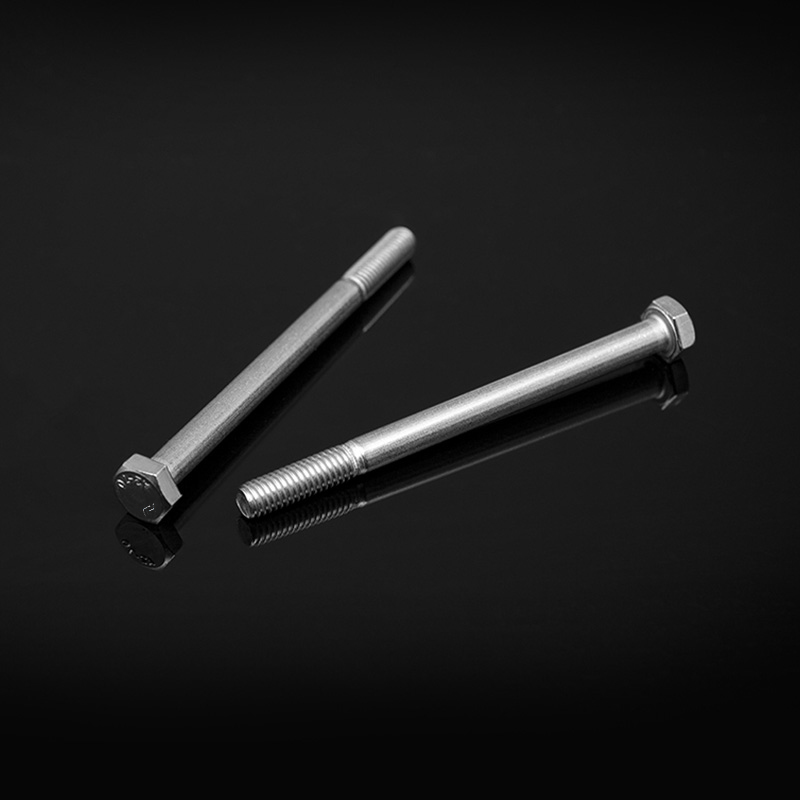
Stainless steel hexagon head bolts, commonly referred to as hex bolts, are one of the most widely used fasteners in both industrial and construction settings. They feature a six-sided head that allows for easy tightening with a wrench or socket, a fully or partially threaded shank, and are designed to be used with a nut or threaded hole. The hexagonal head provides a large bearing surface and accommodates significant torque without damaging the fastener head, which is why hex bolts are chosen for high-strength structural connections.
These bolts are manufactured according to international standards such as ISO 4014 (partially threaded), ISO 4017 (fully threaded), DIN 931, and DIN 933. In North America, ASME B18.2.1 governs inch-series hex bolts. When selecting stainless steel hex bolts, you need to consider thread type (metric or imperial), diameter, thread pitch, and length. A bolt that is too short will not engage enough threads for a secure joint; one that is too long may protrude unsafely or interfere with adjacent components.
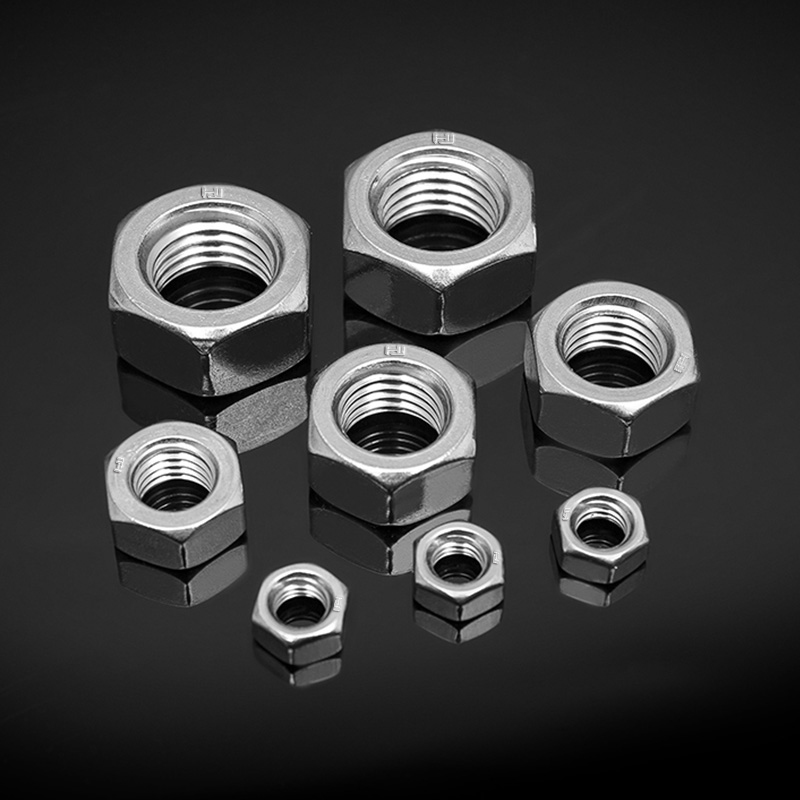
Stainless steel hexagon nuts are the standard counterpart to hex bolts. They feature an internal thread and a six-sided exterior that allows tightening with a wrench. Available in full-height (standard) and thin/jam variants, hex nuts are produced to ISO 4032, ISO 4033, DIN 934, and other equivalent standards. When paired with a stainless steel hex bolt, they create a complete, corrosion-resistant bolted joint suitable for demanding conditions.
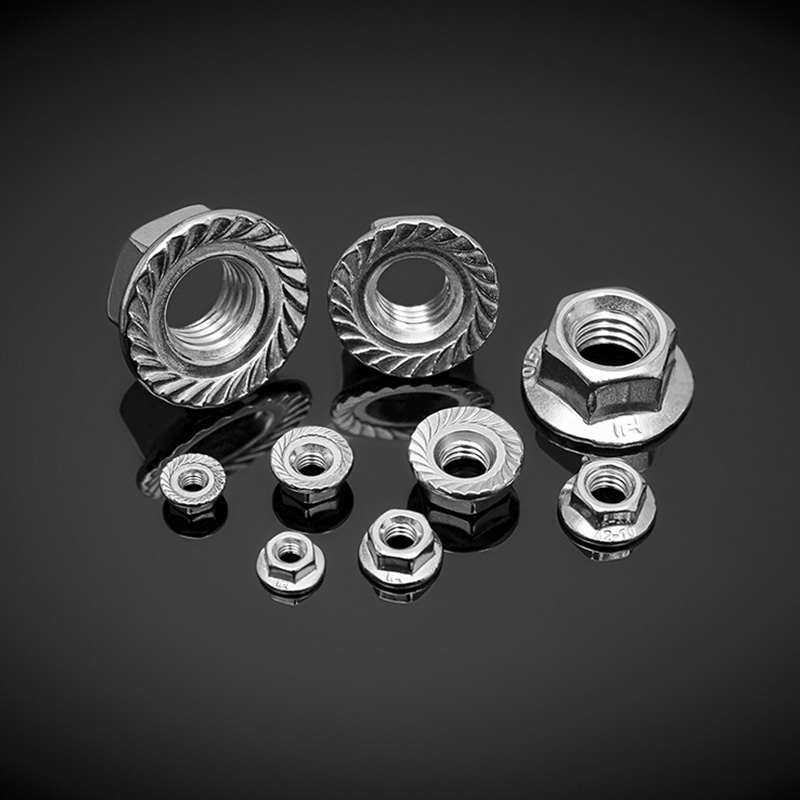
Beyond the traditional hex nut, stainless steel nuts come in several specialized forms, each engineered for specific performance needs. Nylon insert lock nuts (ISO 7042 equivalent) use a nylon collar to resist vibration-induced loosening — a critical feature in automotive and machinery applications. Flange nuts incorporate an integrated washer-like flange that distributes load across a wider area, reducing the need for a separate washer. Cap nuts (acorn nuts) cover exposed bolt ends for aesthetic purposes and to prevent thread damage. Understanding which nut type to use is just as important as choosing the correct bolt.
| Nut Type | Key Feature | Typical Use |
| Hex Nut (Full) | Standard height, 6-sided | General fastening with hex bolts |
| Jam Nut (Thin) | Reduced height for tight spaces | Lock nut applications, adjustments |
| Nylon Insert Lock Nut | Nylon collar resists loosening | Vibrating machinery, automotive |
| Flange Nut | Built-in wide bearing flange | Sheet metal, soft substrates |
| Cap Nut (Acorn) | Domed top covers bolt end | Aesthetic finishes, child safety |
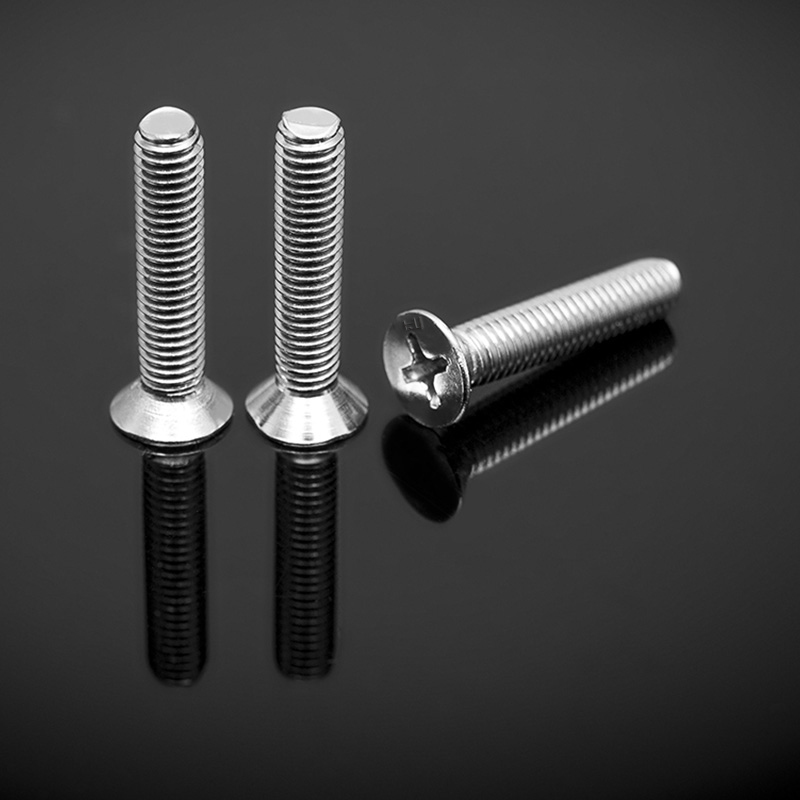
Stainless steel screws differ from bolts in that they are typically designed to be driven directly into a material without requiring a nut. They are available in an enormous variety of head styles and drive types, each offering specific advantages depending on the application. The most important decision when selecting stainless steel screws is matching the head style and drive type to the installation environment, load requirements, and desired appearance.
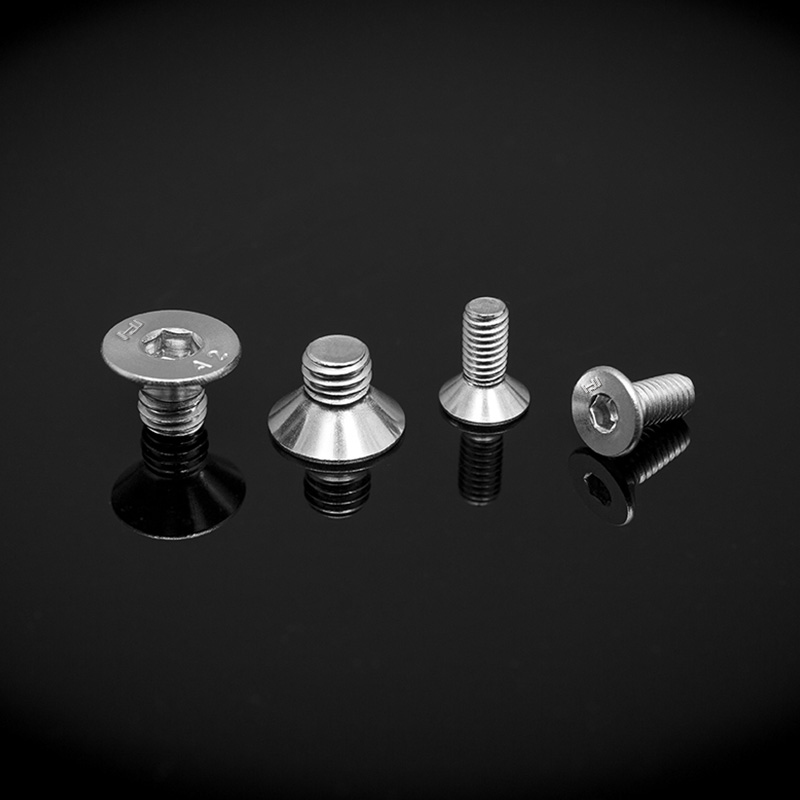
Pan head screws offer a low-profile rounded top with a wide bearing surface, making them suitable for general assembly work. Countersunk (flat head) screws sit flush with the material surface — essential for applications where protruding heads would create safety hazards or interfere with moving parts. Truss head screws have an extra-wide, low-profile head for use in thin or soft materials. For outdoor wood applications, self-tapping stainless steel screws with a bugle head are commonly used to fasten decking, siding, and fencing, as they pull the surface material tight without cracking it.
One important note when using stainless steel screws: galling is a real risk. Galling occurs when the threads of a stainless steel screw and nut seize together due to friction and heat generated during tightening, making disassembly nearly impossible without breaking the fastener. To prevent galling, always apply an anti-seize lubricant or use fasteners from different stainless steel grades (e.g., a 316 bolt with a 304 nut). Reducing tightening speed also significantly lowers galling risk.
A stainless steel flat washer is a thin, disc-shaped plate with a central hole sized to fit over a bolt or screw shank. While it may appear to be a minor accessory, its role in a fastened joint is functionally significant. Flat washers distribute the clamping load of a nut or bolt head over a larger surface area, which prevents the fastener from pulling through softer materials and reduces surface damage on the clamped part. This is especially important when fastening into wood, plastic, aluminum, or other materials that are softer than stainless steel.
Stainless steel flat washers also protect the surface finish of the joined material. When a nut or bolt head rotates directly on a painted or polished surface, it causes scratching and gouging. A flat washer between the fastener head and the surface eliminates this damage. In electrical applications, the washer also serves as an insulating gap when used with nylon or rubber washers beneath it. Standard stainless flat washers are produced to DIN 125A, ISO 7089, and ISO 7090 (with chamfer), with sizes ranging from M2 through M64 in metric and equivalent imperial sizes.
Selecting individual fastener components is only half the task — assembling them correctly into a complete, reliable joint requires matching bolt grade, nut grade, washer size, and surface preparation. A mismatch in any of these elements can lead to joint failure, corrosion, or difficulty during maintenance. The following practical guidelines will help ensure your stainless steel fastener assemblies perform as intended throughout their service life.
First, match the grade of all components. If you use a 316 stainless steel hex bolt, use 316 stainless steel nuts and washers. Mixing grades does not necessarily cause immediate failure, but it can create a galvanic potential difference or inconsistent corrosion resistance that weakens the joint over time. Second, verify thread compatibility: both the bolt and nut must use the same thread standard (metric or UNC/UNF imperial) and the same pitch. A metric M10 bolt with a 1.5mm pitch requires a nut with the same specification — cross-threading with an incorrect nut will destroy both components.
Third, size your flat washer correctly. The washer's inner diameter should be just large enough to pass over the bolt shank without excessive play, while the outer diameter should be appropriate for the load being distributed. Standard DIN 125 washers are fine for most applications, but heavy-duty or structural applications may require large-series washers with a significantly larger outer diameter. Finally, always apply the correct torque using a calibrated torque wrench — over-tightening stainless steel fasteners risks galling and thread stripping, while under-tightening creates loosening under vibration or dynamic loads.
The grade designations for stainless steel fasteners can be confusing, particularly because the same material is referred to by different names in different standards. The ISO 3506 standard classifies stainless steel fasteners as A2 (equivalent to 304) and A4 (equivalent to 316), with property classes 50, 70, and 80 indicating tensile strength levels. American standards typically refer directly to the AISI alloy grades (304, 316). Understanding these equivalencies prevents costly specification errors.
| ISO Grade | AISI Equivalent | Molybdenum | Best For |
| A2-70 | 304 | No | General indoor/outdoor, food grade |
| A4-70 | 316 | Yes (2-3%) | Marine, coastal, chemical environments |
| A4-80 | 316 (high tensile) | Yes (2-3%) | High-load marine structural connections |
| A2-50 | 304 (low tensile) | No | Light-duty non-structural fastening |
For most commercial construction and general engineering applications, A2-70 (304) fasteners deliver an excellent balance of corrosion resistance, strength, and cost-effectiveness. In environments with saltwater exposure, acidic chemicals, or chlorinated water — such as swimming pool surroundings, offshore platforms, or pharmaceutical plants — A4-70 or A4-80 (316) should always be specified. Using A2 fasteners in heavy chloride environments will result in pitting corrosion and eventual joint failure, regardless of how well the components are assembled.
One of the advantages of stainless steel fasteners is their low maintenance requirement compared to plated or painted carbon steel alternatives. However, "low maintenance" does not mean "zero maintenance." Periodic inspection is essential, particularly in structural, safety-critical, or high-vibration applications. Visual inspection should look for signs of surface rust (which can indicate contamination from nearby carbon steel tools or particles embedding in the surface), crevice corrosion in tight joints, and any visible cracking or deformation under the bolt head or nut.
If rust staining appears on an otherwise sound stainless steel fastener, it is often due to free iron contamination from carbon steel tools, grinding dust, or contact with carbon steel surfaces. This can be remediated by passivation — cleaning with a citric or nitric acid solution that removes iron contamination and restores the protective oxide layer. For assemblies that are periodically disassembled, always inspect threads carefully for galling damage before reassembly, and replace any fasteners showing deformed or seized threads. Reusing galled fasteners dramatically increases the risk of in-service failure and thread stripping.
Torque checks are recommended after the initial service period in vibration-prone applications, as stainless steel fasteners can experience slight relaxation (embedding) at the joint interface during early service. Re-torquing to the specified value after 24–48 hours of operation ensures the joint remains properly clamped. For permanent installations that will not be regularly inspected, consider using thread-locking compounds rated for stainless steel, or invest in mechanical locking features such as prevailing-torque nuts to maintain clamp load over the long term.
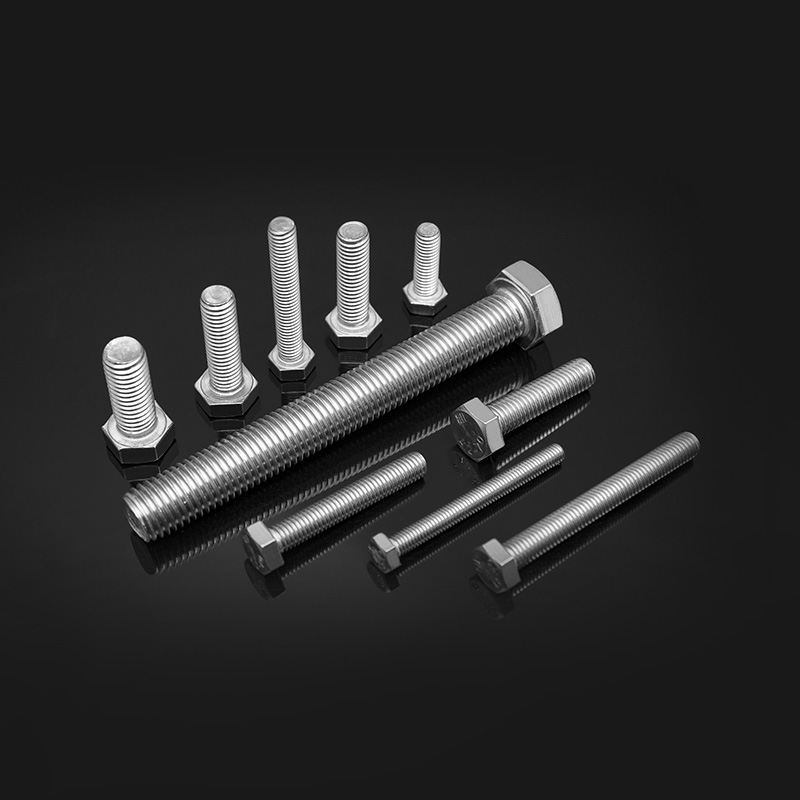
ThreadTolerance: 6gstandardDIN 13-15、DIN 13-12Rod diameter dd≤M20:A2-70、A4-70;M20<d≤M39:A2-50、A4-50;d≥M39:C3、C4;d<M39
See Details
Copyright © Jiangsu Huajie Stainless Steel Products Co., Ltd. All Rights Reserved.