eng
eng English
 русский
 Deutsch
 عربى
عربى
+86 189 6101 2359
+86 133 6521 5663
+86 138 5268 6835
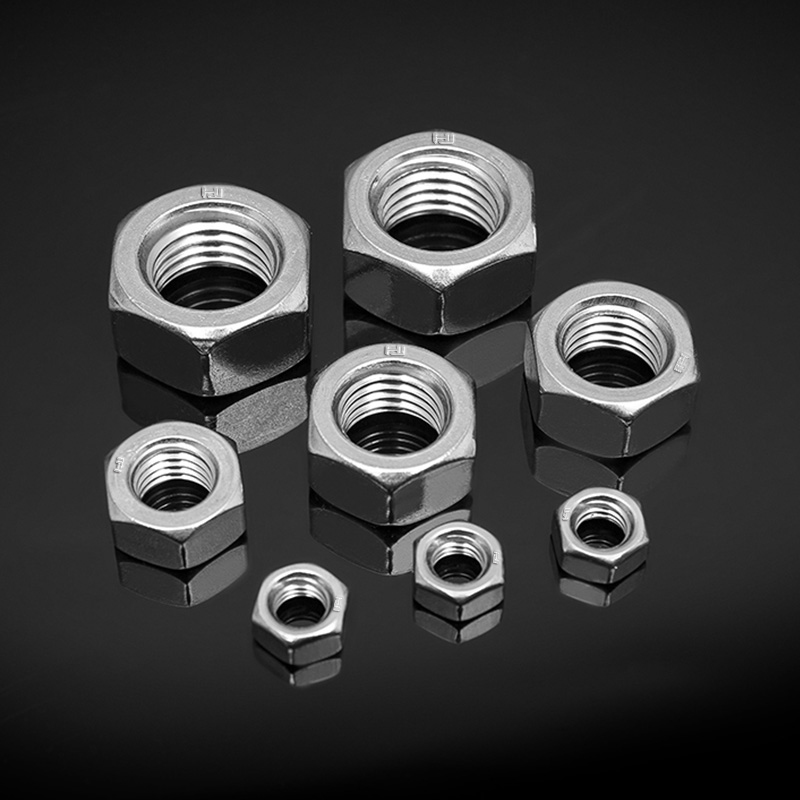
Stainless steel hexagonal nuts are among the most widely used fasteners in industrial, marine, food processing, construction, and chemical equipment applications. Their combination of corrosion resistance, mechanical strength, and dimensional reliability makes them a default choice wherever standard carbon steel fasteners would fail prematurely due to moisture, chemicals, or temperature extremes. However, not all stainless hex nuts are equal — differences in grade, manufacturing precision, surface condition, and compliance with recognized standards can have a significant impact on joint integrity and service life. This guide covers the key evaluation criteria and practical purchasing considerations that matter most when specifying or sourcing these components.
Content
The first step in any informed purchasing decision is understanding which standards apply to your application and what they actually require. Several international and regional standards govern the dimensional, mechanical, and material requirements for stainless steel hex nuts.
When evaluating a supplier or a batch of nuts, always verify which specific standard and edition the product is certified to. "Stainless steel hex nut" without a standard reference is insufficient for any critical application — the standard number defines the acceptance criteria against which the product can be objectively evaluated.
Stainless steel hex nuts are produced in several alloy grades, and selecting the wrong one is one of the most common and costly mistakes in fastener procurement. The grade must match both the corrosion environment and the mechanical requirements of the joint.
Under the ISO classification system, the two most common stainless grades for hex nuts are A2 and A4. A2 corresponds to AISI 304 / 18-8 stainless steel, containing approximately 18% chromium and 8–10% nickel. It offers excellent general corrosion resistance in atmospheric, freshwater, and mildly chemical environments. A4 corresponds to AISI 316, which adds 2–3% molybdenum to the composition. This addition significantly improves resistance to chloride-induced pitting and crevice corrosion, making A4 the correct choice for marine environments, coastal installations, swimming pools, food processing equipment, and applications involving chlorinated water or mild acids.
Substituting A2 for A4 in chloride-rich environments is a common field failure cause. The nuts may appear identical and pass initial inspection, but corrosion-induced loosening or fastener failure can occur within months in marine or chemical exposure conditions.
Stainless steel nuts are not classified by "grade 8" or "grade 10.9" like carbon steel fasteners — instead, ISO uses a combined designation such as A2-70 or A4-80, where the number indicates the minimum tensile strength in units of 10 MPa. Property class 50 indicates cold-worked or annealed material with a minimum tensile strength of 500 MPa. Class 70 (700 MPa) and class 80 (800 MPa) indicate progressively work-hardened material with higher proof loads. For most structural applications, A2-70 or A4-70 is adequate. High-load or vibration-prone joints may require A4-80 to ensure sufficient clamping force retention.
Whether you are conducting incoming inspection of a purchased lot or evaluating a potential supplier, the following quality parameters define whether a stainless steel hex nut is fit for use in critical applications.
Dimensional checks should verify width across flats (WAF), width across corners (WAC), nut height (m), and bearing face runout. These dimensions must fall within the tolerances defined by the applicable standard. Undersized WAF dimensions reduce wrench engagement, increasing the risk of rounding during installation. Excessive height variation affects proof load — a nut that is too thin will strip threads under specified torque, while an oversized nut wastes material without a corresponding strength benefit.
All metric hex nuts should be gauged with go/no-go thread gauges conforming to ISO 1502. The thread tolerance class for standard hex nuts is 6H (ISO system), which defines the internal thread form, pitch diameter limits, and minor diameter. Nuts that fail go-gauge inspection will not assemble with a conforming bolt, while those that fail no-go gauge have oversize threads that may not develop full proof load during tightening. Thread gauging is a non-negotiable incoming inspection step for any safety-critical fastener application.
Proof load testing verifies that the nut can sustain the specified axial tensile load without permanent deformation or thread stripping. Under the ISO system, a mandrel of specified dimensions is threaded through the nut and an axial load equal to the proof load is applied. After load removal, the mandrel must be removable by hand or with a torque not exceeding a defined limit. Any permanent deformation, thread stripping, or mandrel seizure constitutes a failure. This test is the most direct verification of the nut's load-carrying capability and should be performed on a statistically valid sample from each lot.
Grade substitution — particularly the use of A2 material sold as A4 — is a documented problem in commodity fastener supply chains. PMI (positive material identification) using handheld XRF analyzers is a fast, non-destructive way to verify alloy composition at the receiving dock. For critical applications, third-party chemical analysis certificates from accredited laboratories should be required as part of the supply documentation. Look for mill certificates (also called material test reports or MTRs) that trace the material to a specific cast or heat number.

The surface condition of a stainless steel hex nut affects both its corrosion performance and its friction behavior during installation. Nuts should be free from visible cracks, seams, laps, burrs, and scale. The bearing face must be flat and perpendicular to the thread axis within the limits defined by the standard, as bearing face tilt generates uneven clamping load distribution that can cause joint loosening under vibration.
Under ISO 4032 and related standards, nuts of property class 70 and above must be marked with the manufacturer's identification symbol and the property class designation (e.g., A2-70). This marking is typically applied to the bearing face or one of the flats by stamping or laser engraving. Unmarked nuts should be treated as suspect in any quality-controlled supply chain, since the absence of marking makes traceability and lot segregation impossible after delivery.
Translating technical requirements into an effective purchasing specification requires clarity on several fronts. The following table summarizes the key specification elements that should appear in any purchase order or supplier qualification document for stainless steel hex nuts:
<td style="borde
| Specification Element | What to Define | Example |
| Dimensional Standard | ISO, DIN, ASME standard and edition |
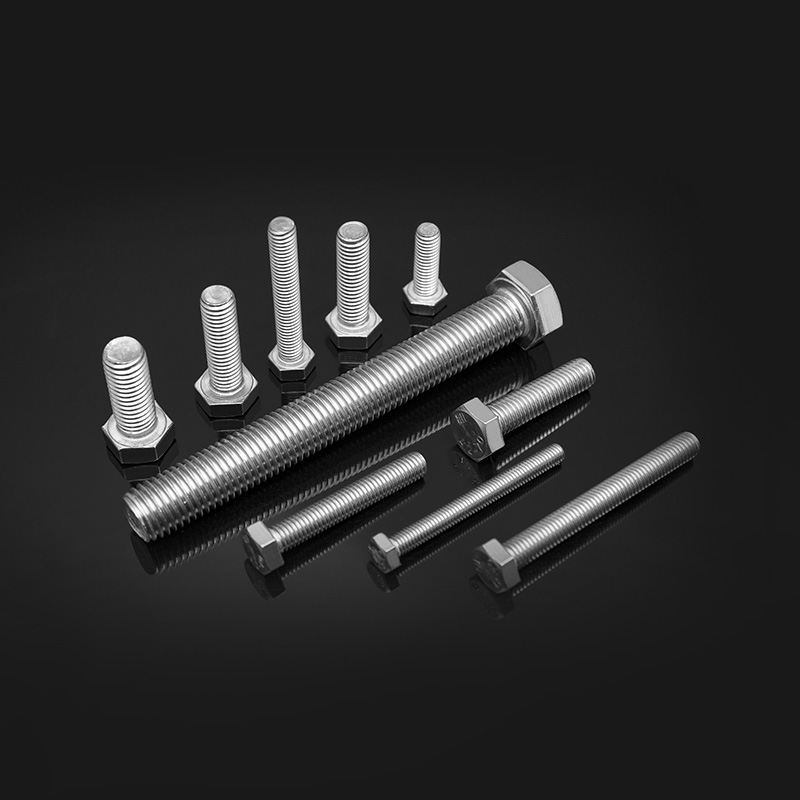
ThreadTolerance: 6gstandardDIN 13-15、DIN 13-12Rod diameter dd≤M20:A2-70、A4-70;M20<d≤M39:A2-50、A4-50;d≥M39:C3、C4;d<M39
See Details
Copyright © Jiangsu Huajie Stainless Steel Products Co., Ltd. All Rights Reserved.